

The much-loved Easy Tiger by the Mach brothers is now part of The Stirling Smith’s permentant collection!
Director, Caroline Mathers said: ‘We are delighted to give Easy Tiger a permanent home at The Smith. We would like to thank the National Fund for Acquisitions as well as David and Robert Mach for their generosity, which has allowed us to add this incredible piece to our collection. We’re sure he will will bring joy to generations of visitors to come.’
Keep an eye out for a grrr-eat event coming soon
The National Fund for Acquisitions, administered with Scottish Government funding by National Museums Scotland, contributes towards the acquisition of objects for the collections of museums, galleries, libraries and archives throughout Scotland. Find out more about the work of the National Fund for Acquisitions on the National Museums Scotland website: www.nms.ac.uk/nfa
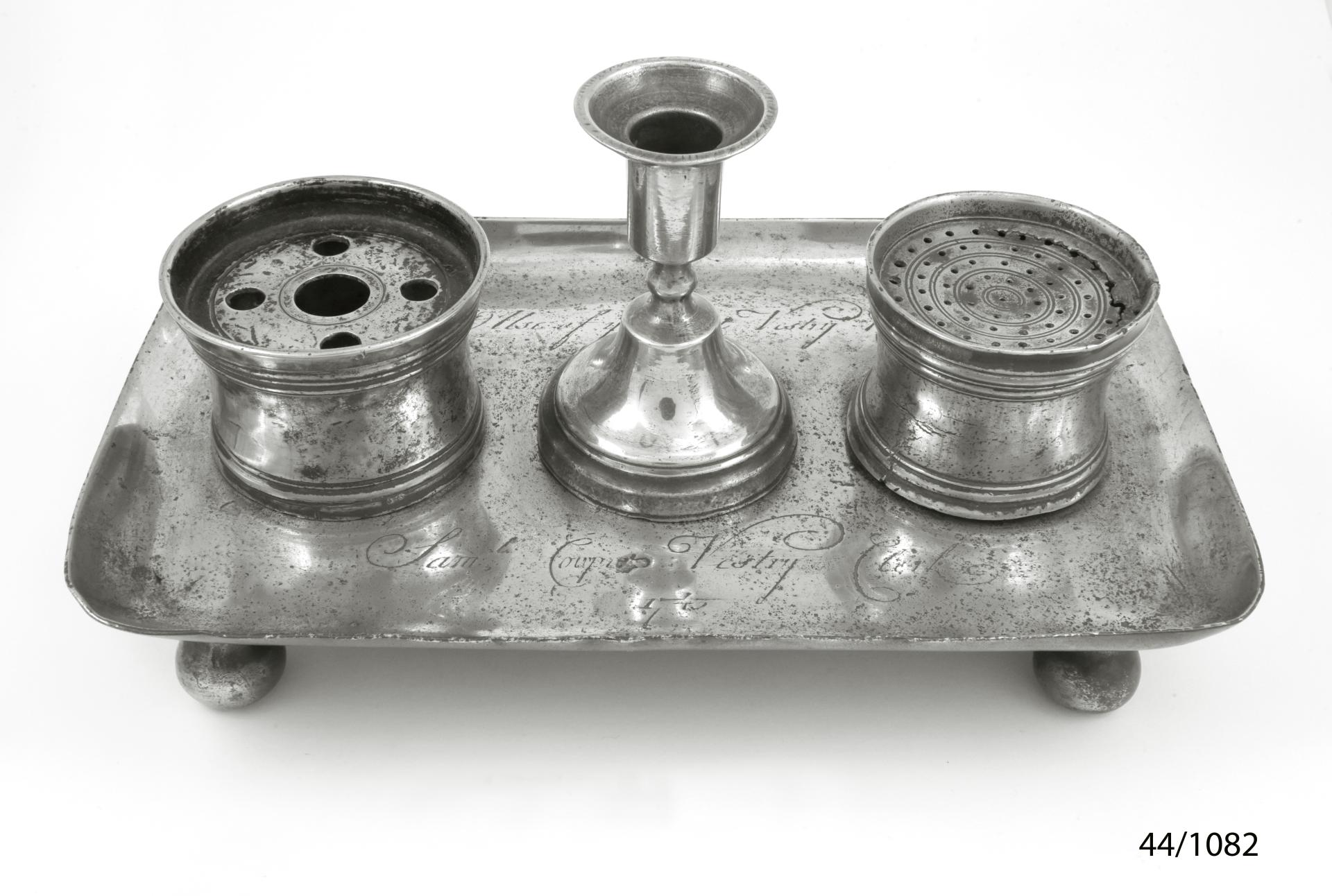 Today’s Stirling Smith object is an elegant writing stand, made for Shoreham Old Church in West Sussex. It is engraved with the words ‘For ye use of ye Great Vestry Room, Saml. Coupers Vestry Clerke 1745’ and is in the Neish Collection of British Pewter.
Alex Neish has spent a lifetime in rescuing old pewter, much of which was going abroad with the antique trade. He has spent an equal amount of time researching his collection and writing about it in specialist journals. Working with his wife Patricia he has now produced a magnificent colour catalogue of 232 pages, illustrating each of the pieces. Much of the photography work was done by John McPake who worked as a photographer for Central Region and Stirling Councils.
Alex Neish’s gift of his world–famous collection to the Stirling Smith Art Gallery and Museum is well known. Last year, he was awarded the Fellowship of the Smith in recognition of his contribution to the preservation and study of pewter and his gift to the Smith. We are pleased to announce that he has made an additional gift of the limited edition of this special publication to the Stirling Smith, and we are retailing it exclusively at £40 per copy in support of the collection.
It is a unique publication of which Stirling can be justly proud.
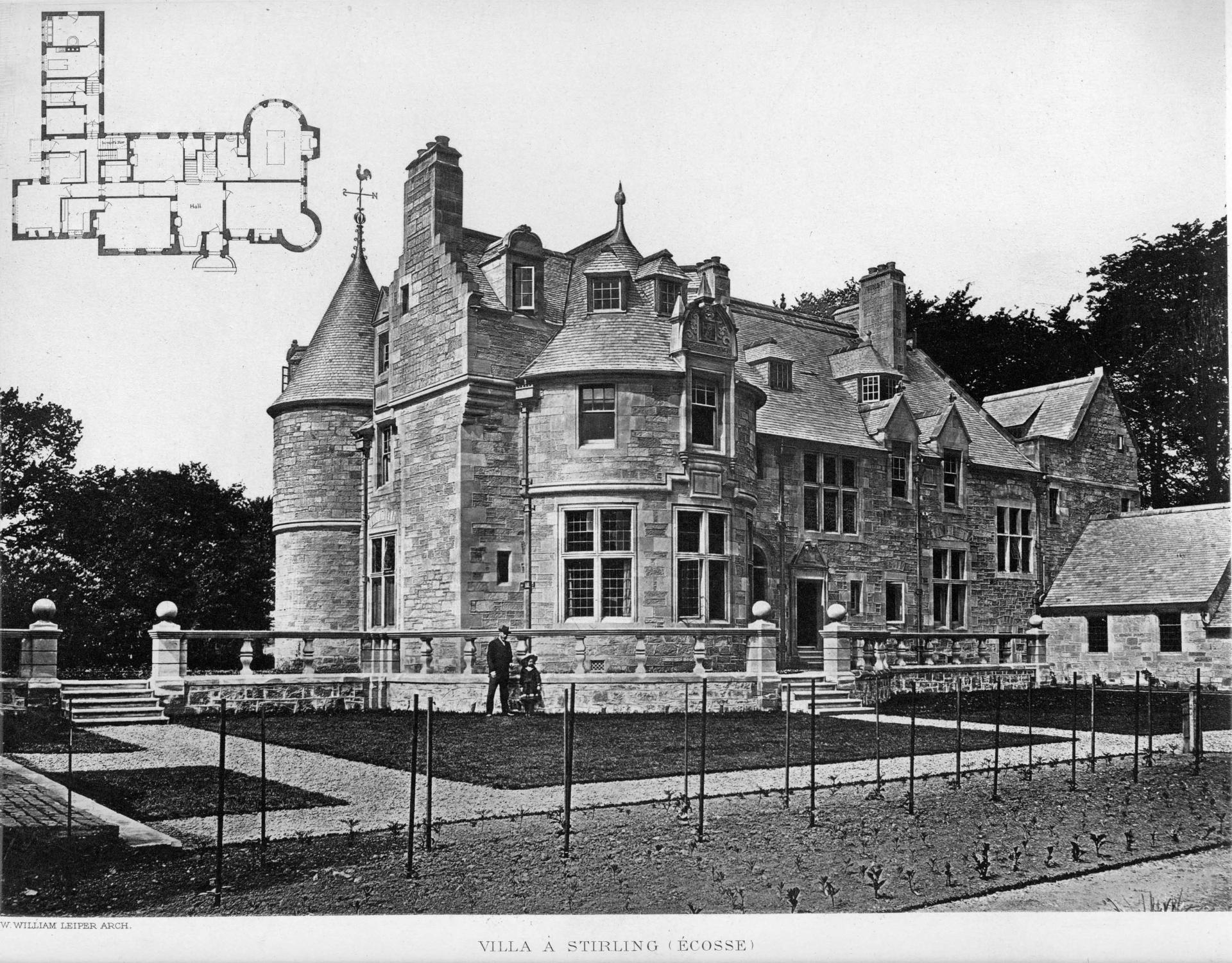 Langgarth is one of Stirling’s great villas, designed by the architect William Leiper (1839 – 1916). Built in 1897, it was originally one in a group of four on the St Ninians Road. The others were Viewforth (Stirling Council headquarters), Springbank (demolished to make way for Central Regional Council’s headquarters in 1995) and Annfield (also demolished). Langgarth was latterly used by Central Regional Council, and along with its little gatehouse, is now empty and boarded up.
This illustration is from the French magazine L’Architecte, 1907 and was purchased for the Smith from ebay. It shows Langgarth in its early years. Leiper was an architect who paid as much attention to the laying out of the gardens and grounds as he did to the building, and the garden has yet to mature.
The 1901 Census lists the owner of Langgarth as widower William Renwick, aged 61 with his son Thomas, 8, and daughter Bethea, 7. His sister-in-law and five servants made up the household, with gardener George McCall and his wife Ann in the Lodge. Renwick was proprietor of the sugar cane mills in Bengal, India.
Leiper is an architect of outstanding importance with the design of buildings such as the Templeton Carpet Factory, Dowanhill Church and the City Chambers banqueting hall, all in Glasgow and many fine villas in Helensburgh. It would be a shame if Langgarth were lost to Stirling.
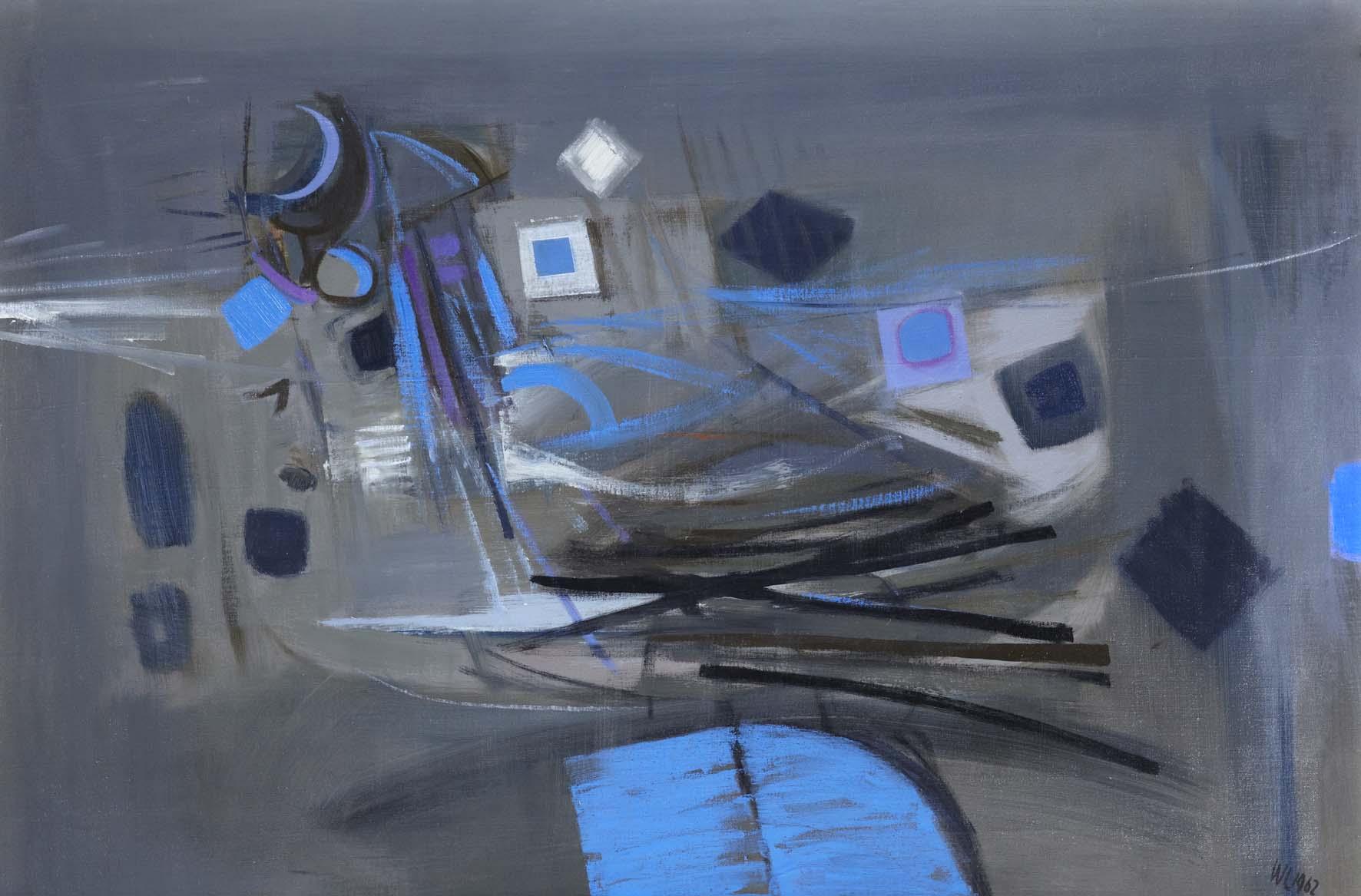 The Stirling Smith has a collection of some 850 major works of art which show different aspects of the history of Scottish, British and European art. This work by William Hunter Littlejohn (1929 – 2006) is one of two in the Smith collections, featured in a brand -new book on Education and Inspiration in Scottish Art: Students of Hospitalfield.
Littlejohn, a native of Arbroath, was an important artist who played a significant part in the history of Scottish art. He studied at Gray’s School of Art, in Aberdeen. He spent time as artist in residence at Hospitalfield, the summer school for promising young painters in Arbroath. This painting in the Smith collections, Evening Star III was painted in 1962. Taking its inspiration from Arbroath harbour, it is abstract expressionist in style.
Littlejohn held his first solo exhibition in 1963. He taught in the Angus area then joined the staff at Gray’s as a lecturer. In 1972, he was appointed their head of fine art, retiring in 1991.
His works can be found in 14 public collections and in many private ones, including that of Her Majesty the Queen. The two works in the Smith collections were gifted by the Friends of the Smith.
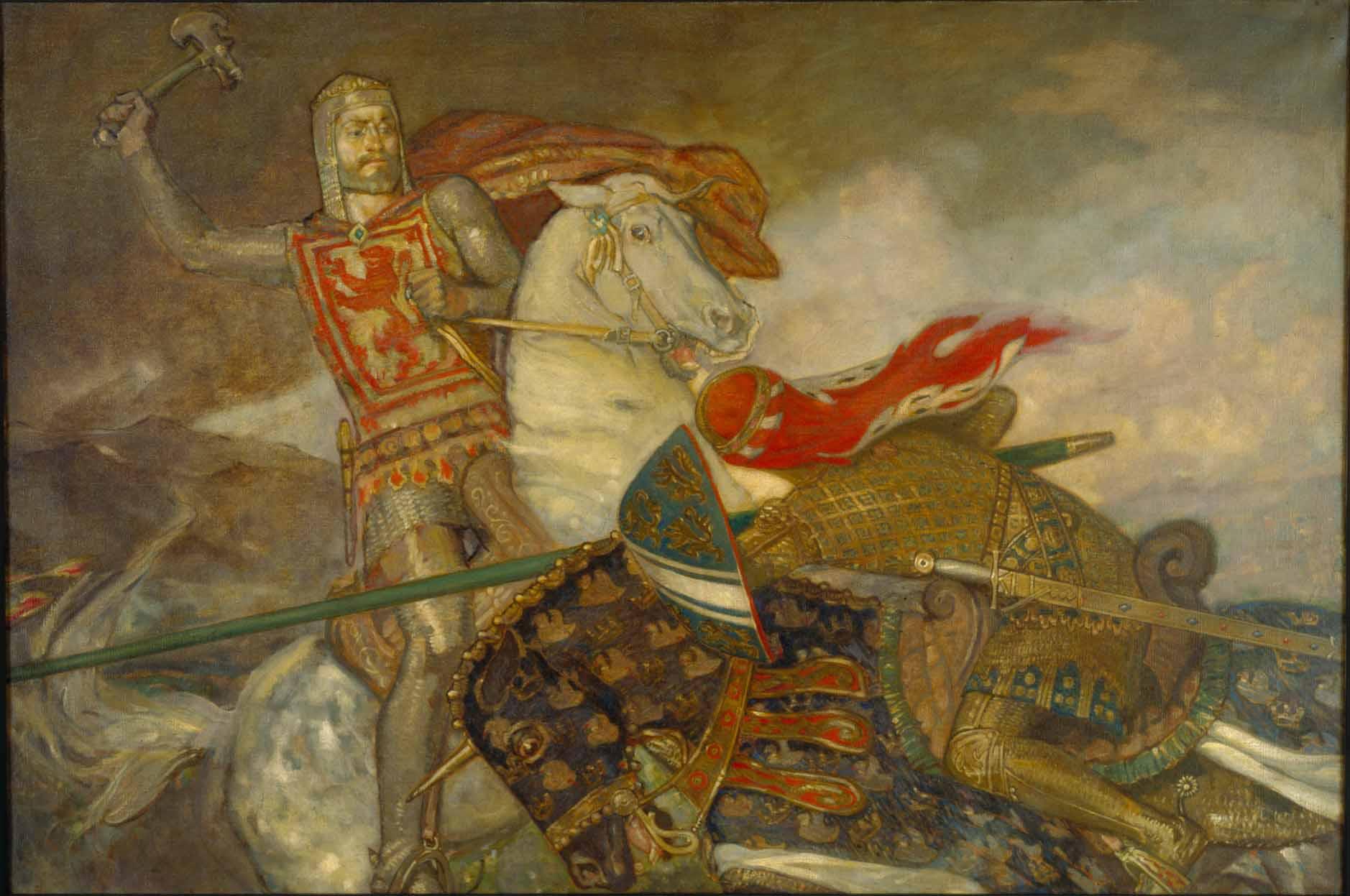 With the approach of the 704th anniversary of the Battle of Bannockburn this weekend, it is worth re-visiting one of the Smith’s more famous paintings. ‘Bruce and de Bohun’ was painted by artist John Duncan (1866 – 1945) as an entry in the national competition run by Kelvingrove Art Gallery for works to celebrate the 600th anniversary of the battle in 1914. The work of the prize-winning artist John Hassall which hangs in Kelvingrove today was highly unpopular and condemned as ‘the False Bannockburn’, the choice of scene being the prayers before the battle.
Duncan chose an episode from 23 June. Artists have tackled this subject again and again, perhaps because it is so graphically described by the poet John Barbour (1320-95) in his epic poem, The Bruce. Immediately before the Battle, the English knight Sir Henry de Bohun challenged King Robert, thinking because he looked insignificant on his small grey horse, he could kill him. Bruce killed de Bohun with one stroke of his battle axe. The artist has depicted carefully the costume and heraldic tributes of the two warriors.
John Duncan exhibited at the Smith and gave a talk on ‘Painting Today’ in 1938. Knowing how important Bannockburn is to the history of Stirling and Scotland, he bequeathed this work to the Smith.
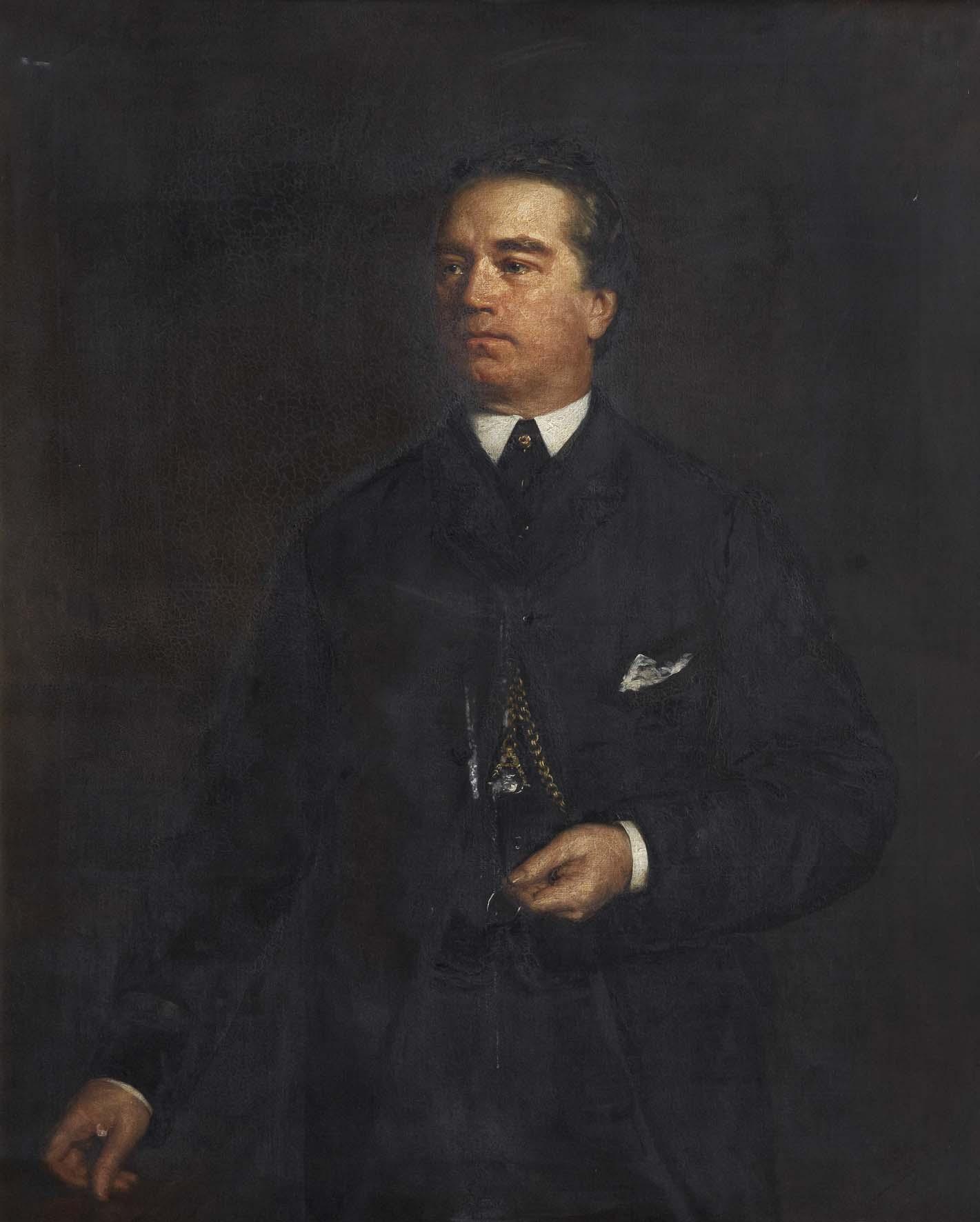 People expect the Stirling Smith to have portraits of past Provosts of Stirling. This is not the case, for unlike the other major Scottish cities, Stirling has never commissioned or curated civic portraits. There are few Stirling Provosts represented in the Smith’s collections and most, like this one, were painted as private individuals.
George Christie was a businessman of substance, engaged in his father’s brick and tile manufactory at Forthbank. It was shown as a large enterprise on Wood’s map of 1820 and by the time George inherited it, there were other operations in Perth, Aberuthven and Blackgrange.
Christie was first elected in 1867. In his time in office, Stirling went through radical changes, with the first division of the burgh into wards, and the introduction of the School Boards from 1872. The Stirling Smith was built in his time as Provost, so his name is affixed to the building. The Christie Clock Tower was built in Allan Park in his memory.
In retirement, Christie became very active in freemasonry. He was a member of Lodge Stirling Ancient no. 30 and took 32 degrees in masonry. In 2006, the late Thomas McDonald of Lodge Abercromby project-managed the complete restoration of the Christie clock.
 Kitchen cookers have developed dramatically in the last few decades. Microwave ovens have had wide public usage since the 1980s and now highly technical combination ovens using gas, electric and microwaves are sometimes available in the same appliance to enable perfection cooking.
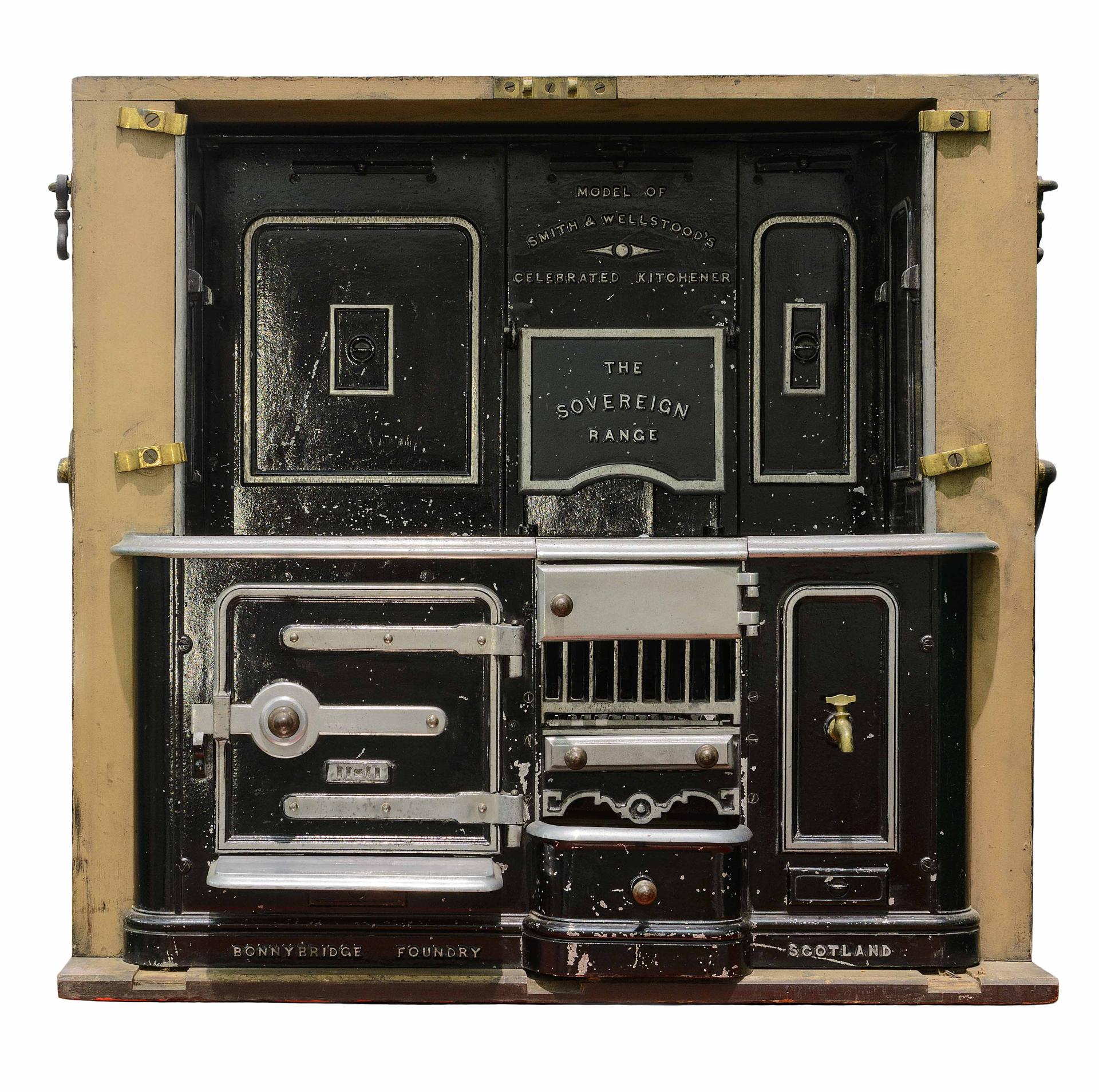
This week’s subject is one of their predecessors. It is a Smith & Wellstood Sovereign Range, popular in the period 1890 – 1930. The big black Scottish ranges which dominated the kitchens of our predecessors were also multi-functional. As well as being a stove with an oven for baking, many like the Sovereign were also heaters and water heaters (note the tap for drawing water on the right), had hot plates and apertures which could serve as toasters and, when a line was strung from side to side of the mantlepiece could also dry clothes. All of them were coal-fired and some grandparents today can remember the Friday night ritual of black-leading the range to give it a perfect shine at the end of the week.
Smith & Wellstood originated in an ironmongery business in Glasgow in 1835 and their expansion to Bonnybridge and overseas is also the story of the Industrial Revolution. This is a model in the Stirling Smith collections used by a travelling salesman to explain the workings of the stove to customers.
Photograph by Alan Gardiner
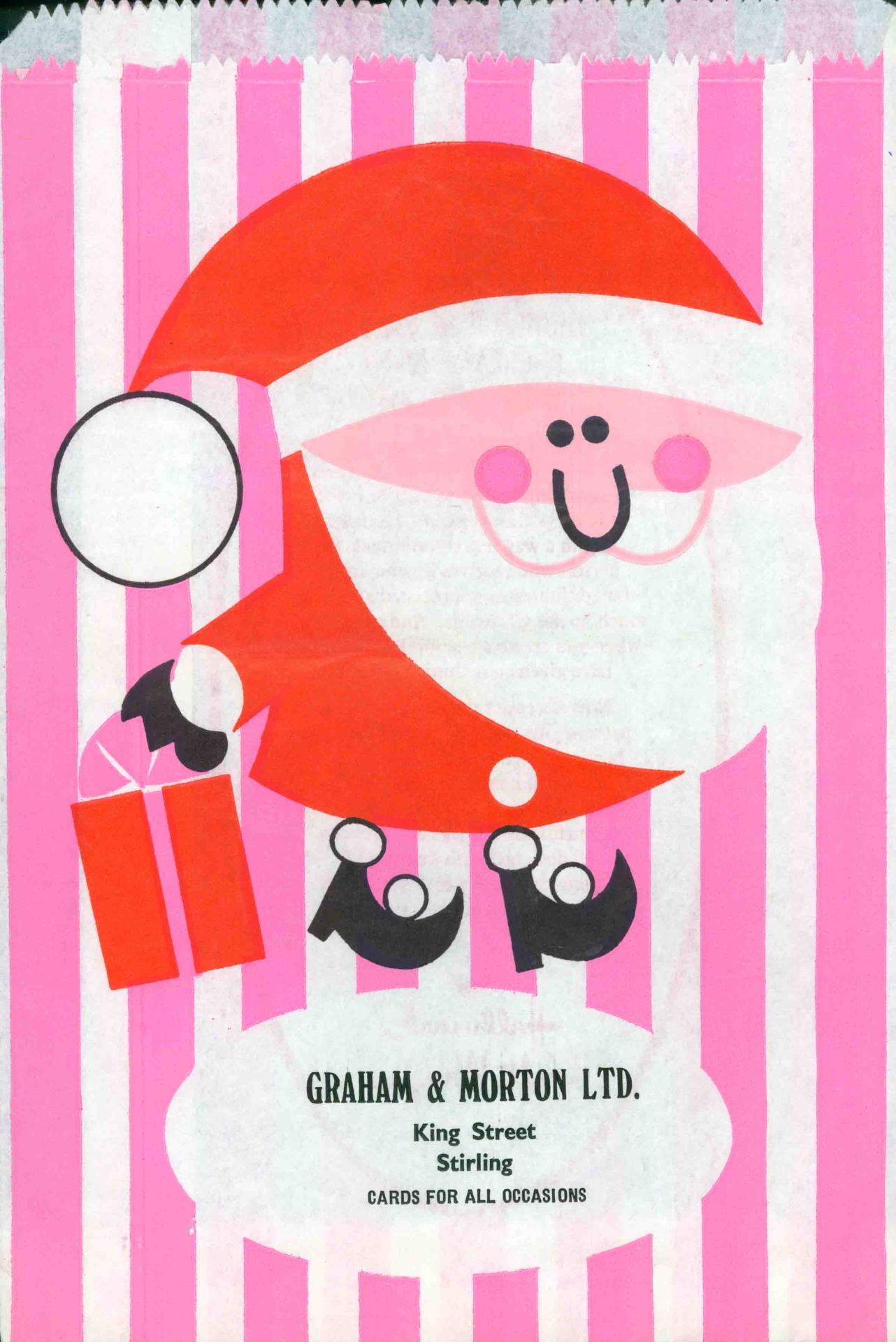 Although there are 215 days to Christmas, the purpose of today’s story is to flag up some very special bags of help which have been given to the Stirling Smith. This little paper bag for cards was a very small part of the great Stirling enterprise of Graham and Morton. The company began in Stirling in 1830 in Baker Street, moved to King Street a few years later and was still there when the business closed in about 1988. It began in ironmongery and then expanded into furniture, house furnishings of all kinds, table and silver ware, tents and marquees, house removals and motor car sales. They operated a large cabinet and upholstery works on Burghmuir and had a warehouse in Falkirk, in an era when furniture manufacturing was local.
The Smith has a collection of bags for many Stirling shops which are no longer with us: McLachlan & Brown, McAree Brothers and Jean Hamilton Ladies Fashion of Port Street.
The Smith is not mounting an exhibition of bags but would like to express thanks for the recent Bags of Help from Tesco in Stirling and Bridge of Allan. This has enabled the painting of the glass roof in Gallery 3 to exclude the daylight which was damaging the collections.
 The matter of the water supply does not trouble us much. We turn on the taps and enjoy clean drinking and bathing water without fuss or effort.
Until the 1840s, the fetching and carrying of water was a major task in Stirling. Circuit Judge Lord Cockburn deplored the fact that ‘the public wells have only one spout each…poor people are obliged to stand shivering for hours before they can get their vessels filled. …I counted 200 tubs, pails, pitchers etc ….with their owners waiting their turns from the solitary spouts. I told the Provost that if I was in his place, these evils should be remedied in a month, simply multiplying the spouts at the existing drawing places.’ The public wells were also contaminated and a proven source of illness.
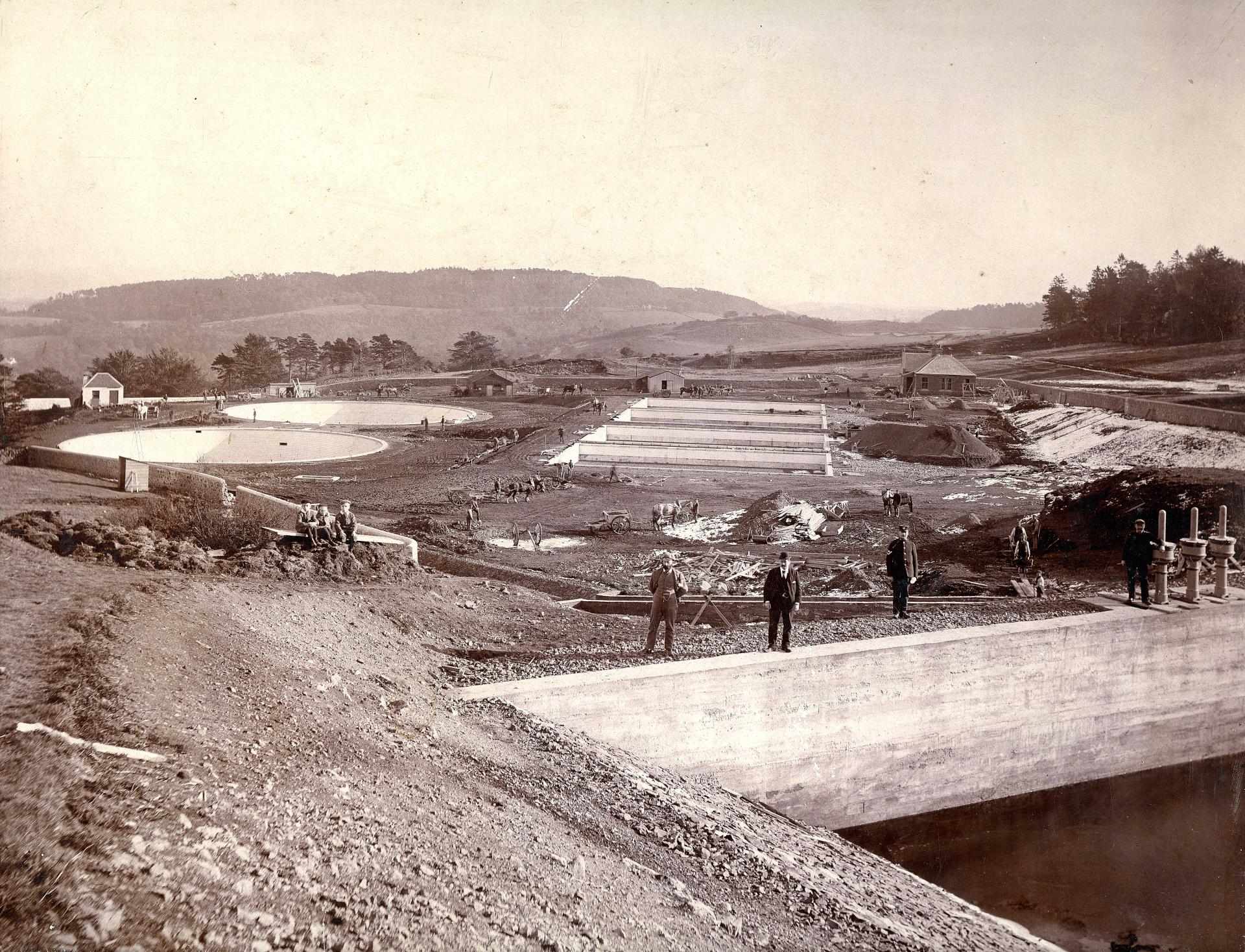
As ratepayers objected to a compulsory water rate, it took an Act of Parliament in 1848 and the creation of the Stirling Waterworks Commission to resolve the issue. The photograph (taken by Stirling’s premier photographers, Crowe & Rogers) shows the new filter beds in the Touch Hills, under construction, November 1895. The engineers were McLuckie and Walker, and Alexander Gall was the main contractor.
The photograph is a recent gift to the Smith by Mrs Wilson of Alva.
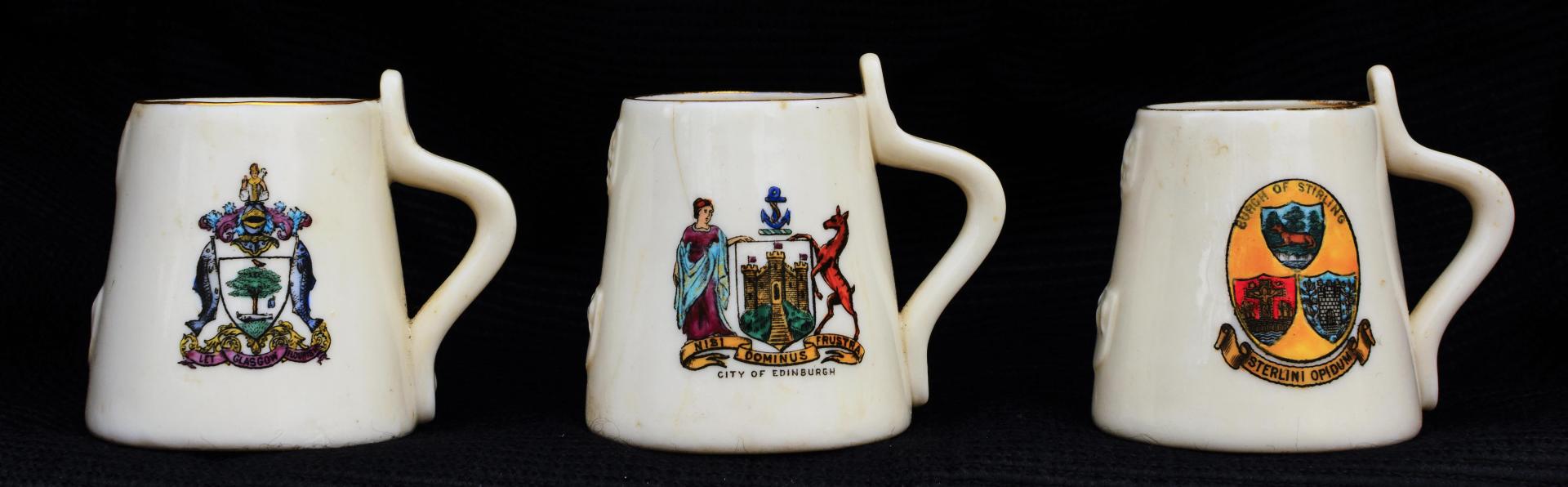
People visit the Stirling Smith for many reasons. Recently the Goss Ware Collector’s Club which draws its membership Britain-wide came specially to see the original Stirling Jug. They brought these three jugs as a gift to the Stirling Smith collections. Printed on the base is ‘Model of the Stirling Pint Measure. One of the ancient standard measures of Scotland deposited in Stirling by Act of Parliament 1457’.
Stirling was given the Jug as it was the main brewing area of Scotland. Measures in all other towns had to be calibrated against it. Made of gun metal, it contains about three and a half Imperial pints. Pride in the Jug continued to the early 20th century, when the Jug was carried in civic processions.
The design of this piece of Goss ware was registered in 1910. The company embellished these souvenirs with coats of arms from different towns. Glasgow, Edinburgh and Stirling are on the pieces here. Another in the Smith collections has Cambridge and there are examples with many other English towns, so the Stirling Jug is known to Goss collectors world-wide.
In 1888 and 1901 the original Stirling Jug was loaned to the Glasgow International Exhibitions. It is one of the unique objects in the Smith collections and every young visitor learns about it.
photo taken by Stirling Smith collections volunteer Alan Gardiner