The story of King Robert the Bruce has been told and re-told ever since he captured England’s best poet, Robert Baston, at the battle of Bannockburn and made him write a poem on the great Scottish victory. Baston took 20 years to do it, and there have been many versions of the story in the centuries since.
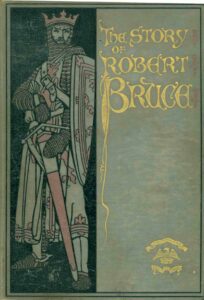 This book by the historian R L Mackie was published in 1913, for the 600th anniversary of Bannockburn in 1914 and was popular for over 30 years. It has 16 illustrations by the artist M Meredith Williams (1881 – 1973) who later worked on the Scottish National War Memorial. It is one of many items from the Smith collections in the Bruce exhibition at the Stirling Smith, where tomorrow at 12 noon, Scott McMaster will give an account of the National Trust Battle of Bannockburn, followed by Dr Michael Penman of the University of Stirling on Friday whose subject is ‘The Tomb of Robert Bruce – a case of mistaken identity? Dunfermline Abbey as Royal Mausoleum and Pilgrimage Site’.
On Friday 30 September at 12 noon Dr David Mitchell will give an account of finding the lost tomb of Robert the Bruce. All are welcome at these free events and lively discussions at the Smith.
http://www.smithartgalleryandmuseum.co.uk/product/lost-tomb-robert-bruce-events/
This delightful cup, saucer and plate set is a recent gift to the Stirling Smith collections by Mr William Fraser. The cup features the Old Bridge of Stirling, the saucer has a print of Stirling Castle and the plate has a composite view of Cambuskenneth. The views on these English Ironstone pottery wares are Victorian, but the pieces date from between 1973 when English Ironstone Pottery Ltd became English Ironstone Tableware Ltd and 1994 when the company went into receivership.
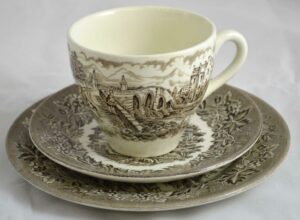 These wares were manufactured in the Washington Works, Hanley, Stoke on Trent and represent a particular time in the long slow contraction of the English pottery industry. With so many imports from overseas undercutting English manufacture, the industry tried different initiatives to grow their market. One tactic was to create different wares with a historic appeal for different towns and villages and advertise them in local newspapers, selling through Royal Mail. After the demise of the company its new incarnation was self-deprecatingly called Just Mugs.
Souvenir mugs, as advertising or fundraising pieces, are a basic staple of most potteries.
Wherever there is creativity, ceramic making will flourish. The availability of the carse clay of Stirling saw the rise of industrial potteries at Throsk, serving central Scotland in the 17th and 18th centuries.
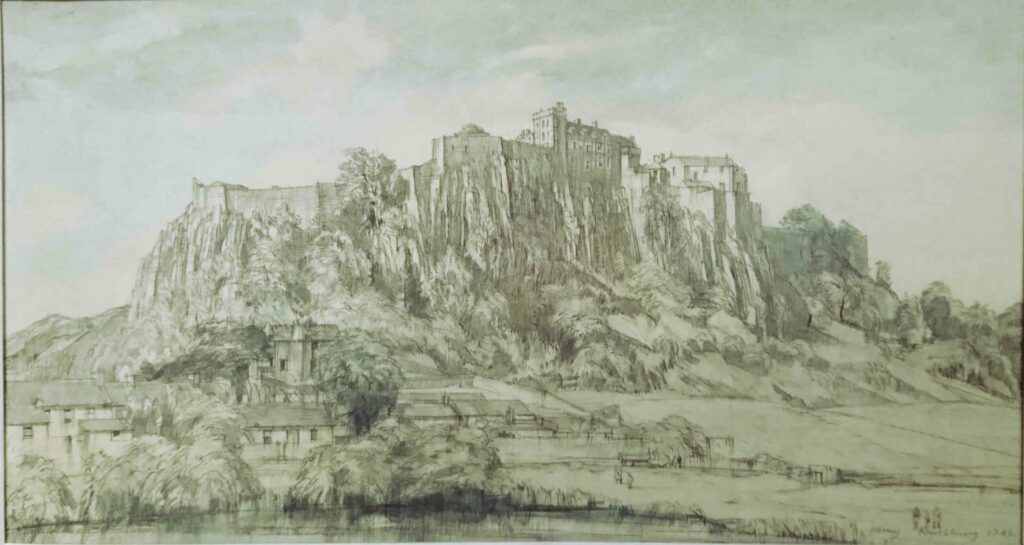
This fine Stirling view is a recent addition to the Stirling Smith collections, secured thanks to funding from Stirling Common Good Fund and through the voluntary services of friend of the Smith Dr Robin Campbell.
Sir Henry George “Harry” Rushbury (1889 –1968) was an eminent and accomplished painter and etcher at the height of his powers when he visited Stirling. He trained at Birmingham School of Art. During the Great War, Rushbury was an official war artist. He was elected a member of the New English Art Club in 1917, the Royal Society of Painter-Etchers in 1921, the Royal Society of Painters in Water Colours in 1922, and the Royal Academy in 1936. In 1940 he was again appointed an official war artist until the end of the Second World War.
Rushbury may have been in Stirling on military business in 1946 when this watercolour of the Castle, enhanced by work in pencil, was done. Stirling was a place of great military importance at that time, although like every other visiting artist during the past 400 years, it was the majesty of the landscape which entranced him.
In 1949, he was elected Keeper of the Royal Academy and Head of the Royal Academy Schools, a post he held until 1964.
Today’s object from the Stirling Smith collections is an advertising card for the firm of George Thomson, Carriage Builder, issued at the Edinburgh International Industrial Exhibition of 1886 and showing two of his carriages. It is a recent gift to the collections from Mrs Jane Millar.
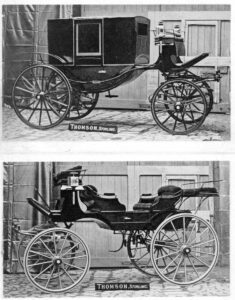
The firm of George Thomson started in the Craigs in the early 1800s, in a small way, and grew to become a major employer within a significant industry in Stirling. By the time when the business passed to the second generation, Thomson had forged a partnership with the Glasgow firm of Buchanan and moved to large purpose built premises in Orchard Place. Thomson used each of the great exhibitions – London in 1851 and 1862, Dublin in 1865, Edinburgh in 1886, to extend his market and output. An addition to the coach works in 1860 was a show room housing 100 carriages.
Thomson exported not only his vehicles throughout the Empire; many of his former apprentices and journeymen set up their own businesses in Australia, Canada and India.
Thomson built many of the first railway carriages in the 1850s. With the advent of motor vehicles, the firm diversified into building cars to order and by 1908, the grandson of the founder, James Thomson, was also Provost of Stirling.
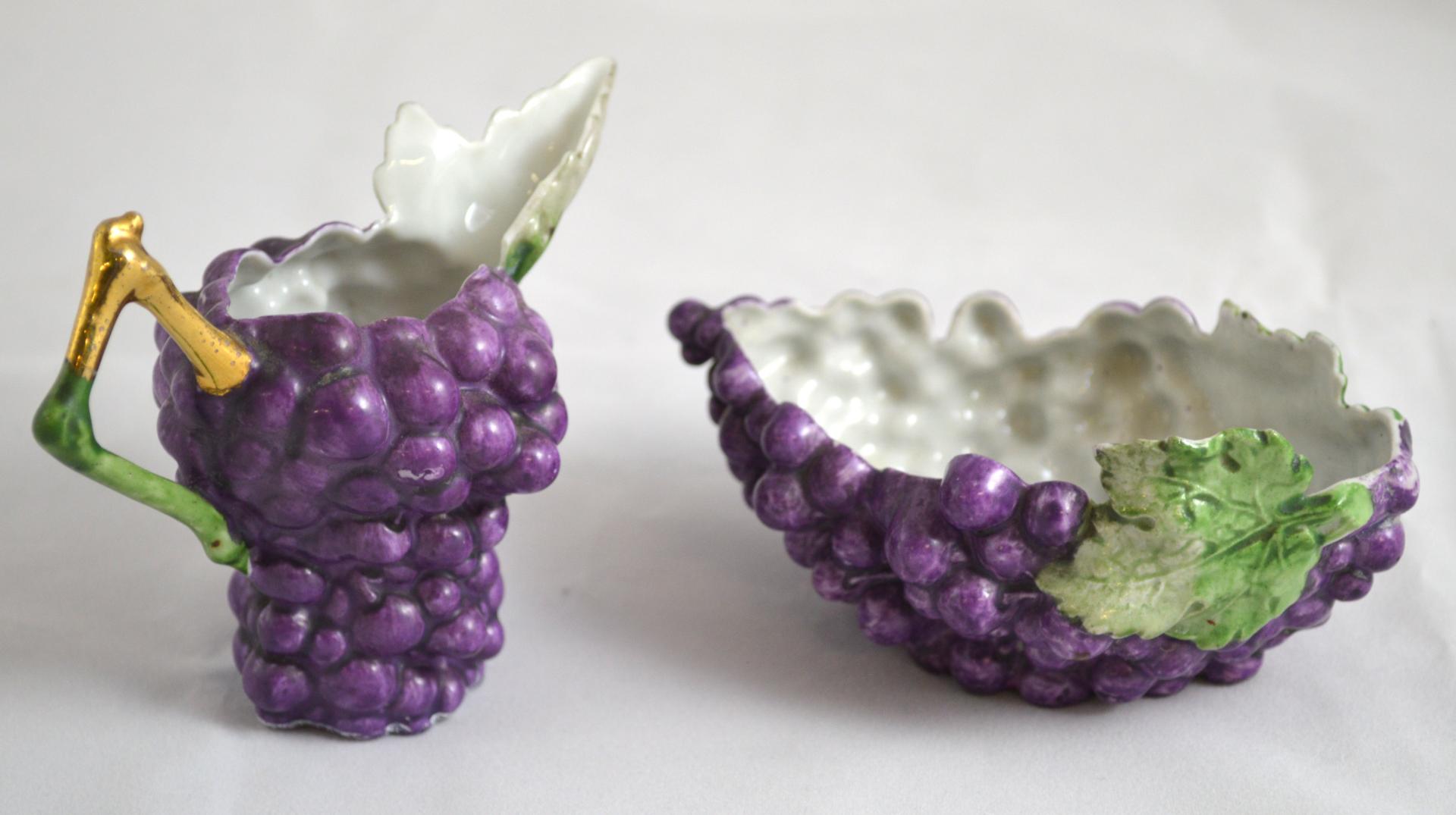
Today’s objects from the Stirling Smith collections are a porcelain sugar bowl and cream jug, hand painted with “A Present from Stirling”. They were recently gifted by Anne Muirhead of Gargunnock, and they reference the Kippen Vine, planted 1891.
By 1922, the Kippen Big Vine was acknowledged to be the world’s largest, producing an annual crop of over 2000 bunches. By 1935, the yearly crop of fragrant, black Gros Colman grapes weighed over a ton. They were sold as a luxury food at the counters of the best stores in Glasgow, Edinburgh and London, and were on the dinner tables of London’s best hotels.
The business of D & W Buchanan, Fruit and Flower Growers of Forth Vineyards, Kippen was both a successful agricultural enterprise and a significant tourist attraction in its time. It was thanks to the husbandry of the Buchanan family that the vine lasted as long as it did. They exhibited at all of the major agricultural shows throughout Britain. The Buchanans admitted visitors to the vineries for sixpence, from the 1920s onwards, and by the 1950s, the vine was surviving largely as a tourist attraction because of the increase in imported grapes.
The Kippen Vine was dismantled in 1964. There are many souvenirs of it in the area. The Smith has a piece of its thick trunk, as well as this dainty sugar and cream.
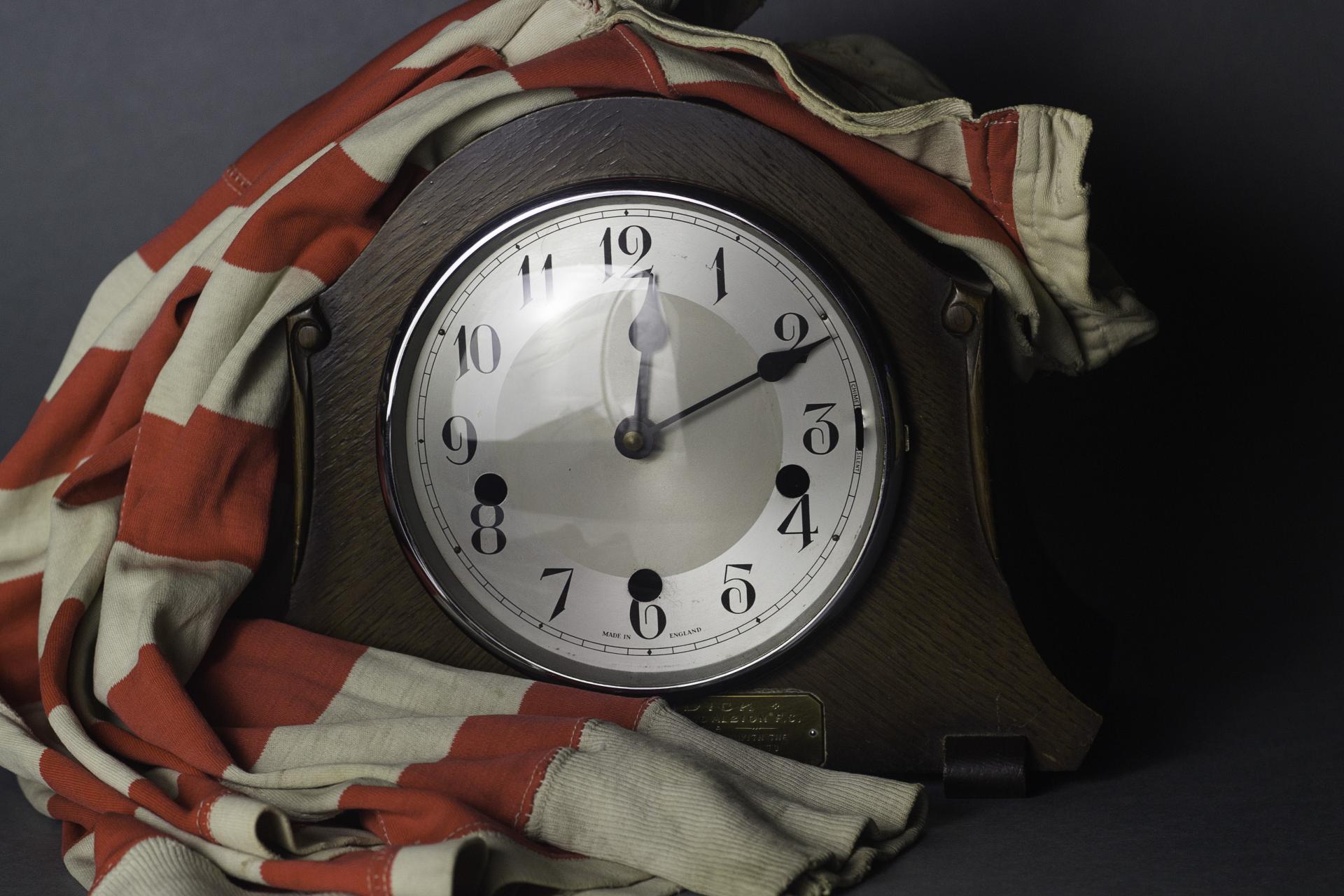
The Stirling Albion exhibition has only another week to run at the Smith, but the good news is that some of the treasures loaned for the exhibition will be staying in the Smith collections – like this rare Albion shirt of 1948 and the clock ‘Presented by the Directors of Albion Football Club as an appreciation for services rendered in securing promotion to A division in 1948 – 49’. Both belonged to footballer George Dick.
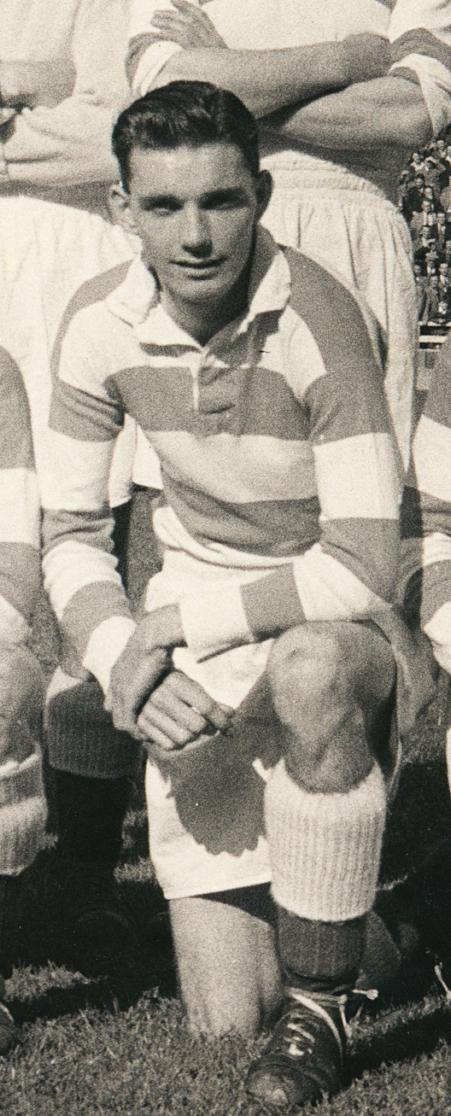 George Dick was signed on a free transfer from Hibernian on 18th September 1945 and went on to play eight seasons for the Albion: Eastern League, C, B and A Divisions.
Nicknamed Happy Feet, Geordie was born in Denny and played for local side Denny YM before joining Hibs as a provisional war signing. His early playing career was interspersed with National Service commitments. He was top scorer in C Division 1945-6, and during his football playing career scored 73 goals in 154 appearances. The information on the careers of all Albion players is collated by Albion historian Jim Thomson.
The Albion exhibition is about their relationship with Japan in 1966, but right now, there is a football team in the Gambia, “The Gambinos”, wearing Albion strips courtesy of Denovo Building Services of Stirling.
Wallace, who liberated Scotland, is the very first national liberator. Others in search of freedom who came after him have always acknowledged that. The Scottish colliers in the 18th century who were serfs, organised themselves intoSir William Wallace Lodges of Free Colliersto establish their freedom. Garibaldi in the 19th century was called ‘The Wallace of Italy’. Louis Kossuth was known as ‘The Wallace of Hungary’ and visited Stirling in the cause of his country’s freedom.
Today’s painting from the Stirling Smith collections shows Banda Singh Bahadur (1670 – 1716) the Sikh hero, freedom fighter and military commander.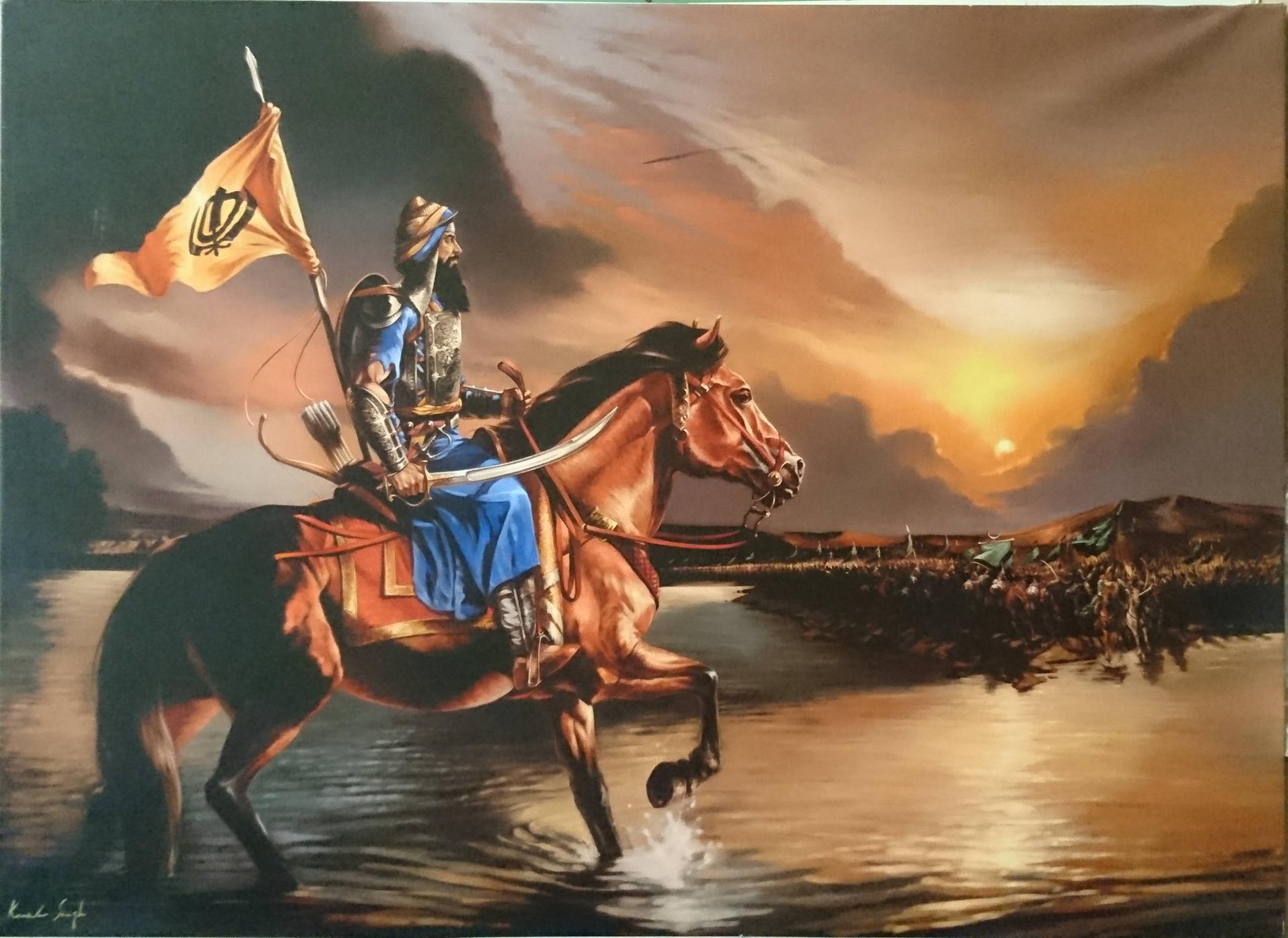
Like William Wallace he was an extraordinary leader. He set up a Sikh republic in the heartland of the Moghul Empire in India, giving land to agricultural labourers and proclaiming the equality of all men as citizens, an act which was in its political significance 80 years ahead of the French Revolution. The republic was hunted mercilessly by the Moghuls, who pursued genocidal action against the Sikh people and tortured and killed Banda Singh Bahadur.
Like Wallace, his memory lives on and in 2010, Sikh historian Jagdeesh Singh organised a conference at the Stirling Smith to compare the history of the Sikh and Scottish people, when the painting was presented to the Smith.
Here is an image of how Cowane’s Hospital should look – pristine, white and cared for, as shown in this model from the Stirling Smith collections, made by Aberdeen man George W Reid. As most people know, Cowane’s has long awaited refurbishment and improvements. The Heritage Lottery upgrade will soon take place and restore it to its former glory.
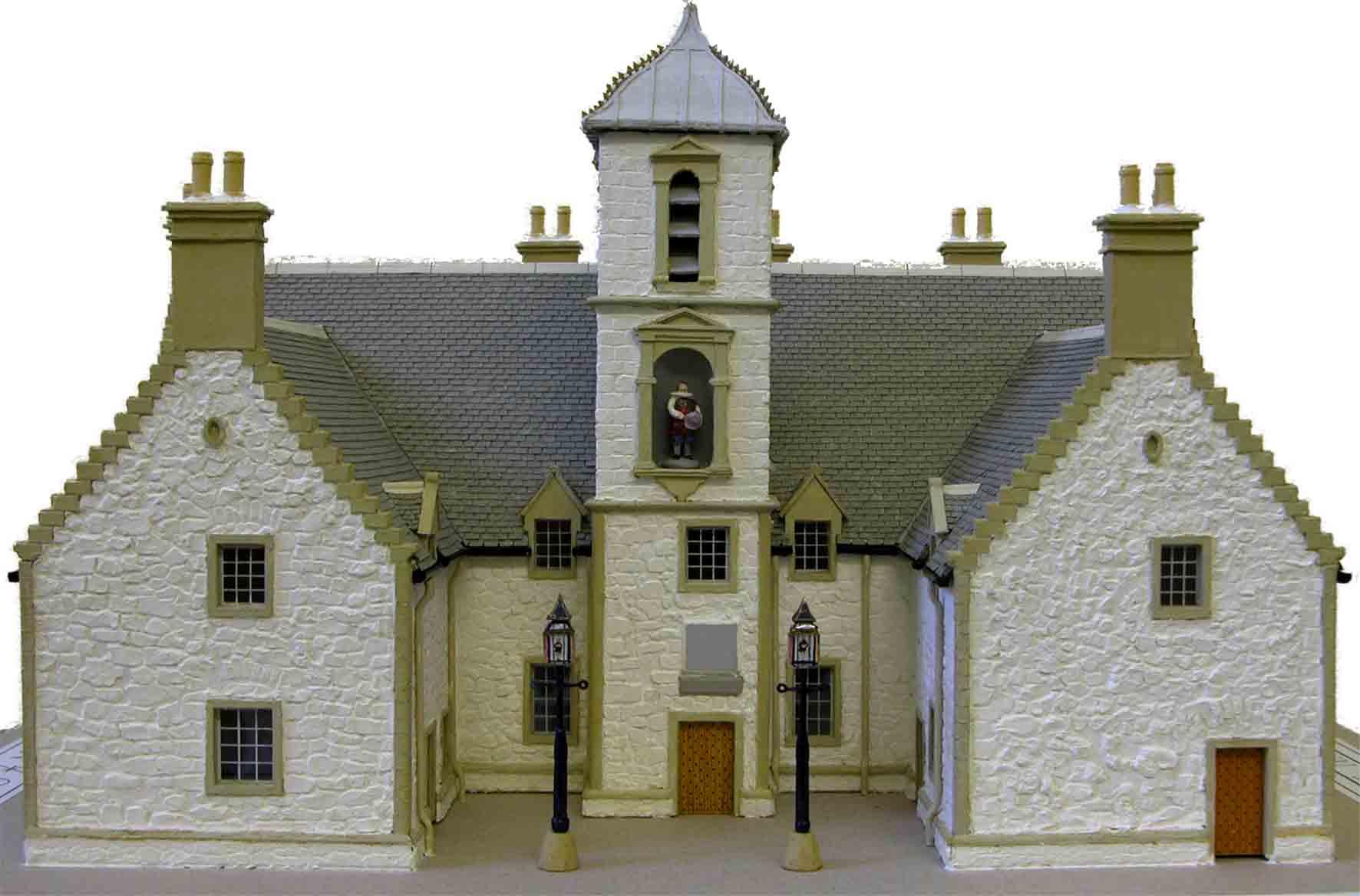
Cowane’s Hospital, completed in 1648, is nearly 370 years old. In his time, John Cowane (died 1633) was one of the best known benefactors in Scotland. His statue is in a niche on the front of the building. In 1874 a similar niche was created for Thomas Stuart Smith on the front of the Smith, but it remains unfilled. The Hospital was intended as a residence for ‘twelve decayed gildbrethern’ or merchants, and was built by John Mylne, royal master mason. As poor merchants were few in Stirling, the Hospital has been used for a great variety of other purposes. It has been a main public hall, a place for dancing lessons, dances, parties, concerts, plays, weddings, public meetings, meetings of the Guildry, some of the Incorporated Trades and other organisations, public and private. It is so much part of the social history of Stirling, that Stirling cannot be imagined without it. Its restoration cannot come soon enough.
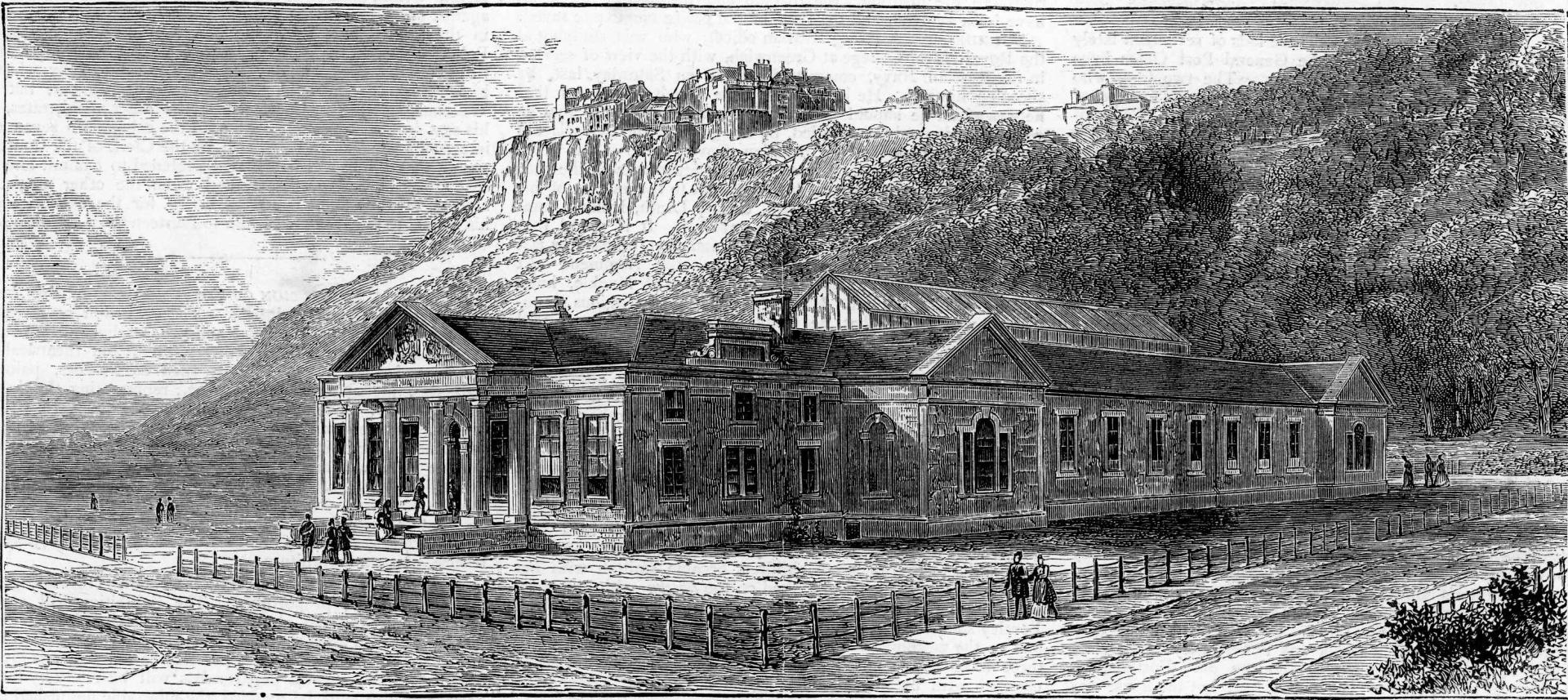
This engraving of the Stirling Smith Art Gallery and Museum in August 1874 was published in The Graphic Magazine, gifted to the Smith by Jim Thomson. The Stirling Smith has served Stirling as a museum, gallery and cultural venue for 142 years. It was therefore quite a surprise to see “Stirling’s Museum 1949” under a photograph of Cowane’s Hospital in a popular Sunday family newspaper. Cowane’s is also a vitally important Stirling cultural institution, but it could never be confused with a museum. We will look at the history of Cowane’s next week.
It is a great pity that both organisations are so little known on a national level that such confusion can go unremarked. The Stirling Smith has an outstanding collection of local, national and international importance. The curators have been working hard to quantify the collection, demonstrating its significance to the Scottish Government to win national Collections Recognition status.
One of the arguments made for national recognition is the longevity of this column, running without a break or repetition since November 2004. Twelve years is something of a record for any newspaper column, but for one on a Scottish museum collection it is virtually unknown. The Smith’s collection has been catalogued here on a weekly basis and one of the 25 letters from eminent people in support of the Smith has been written by the Editor of the Observer.
As part of my Duke of Edinburgh Bronze Award, I am volunteering the Stirling Smith Art Gallery and Museum.
I am sorting through some old boxes and found a box full of old Cold War documents and books.
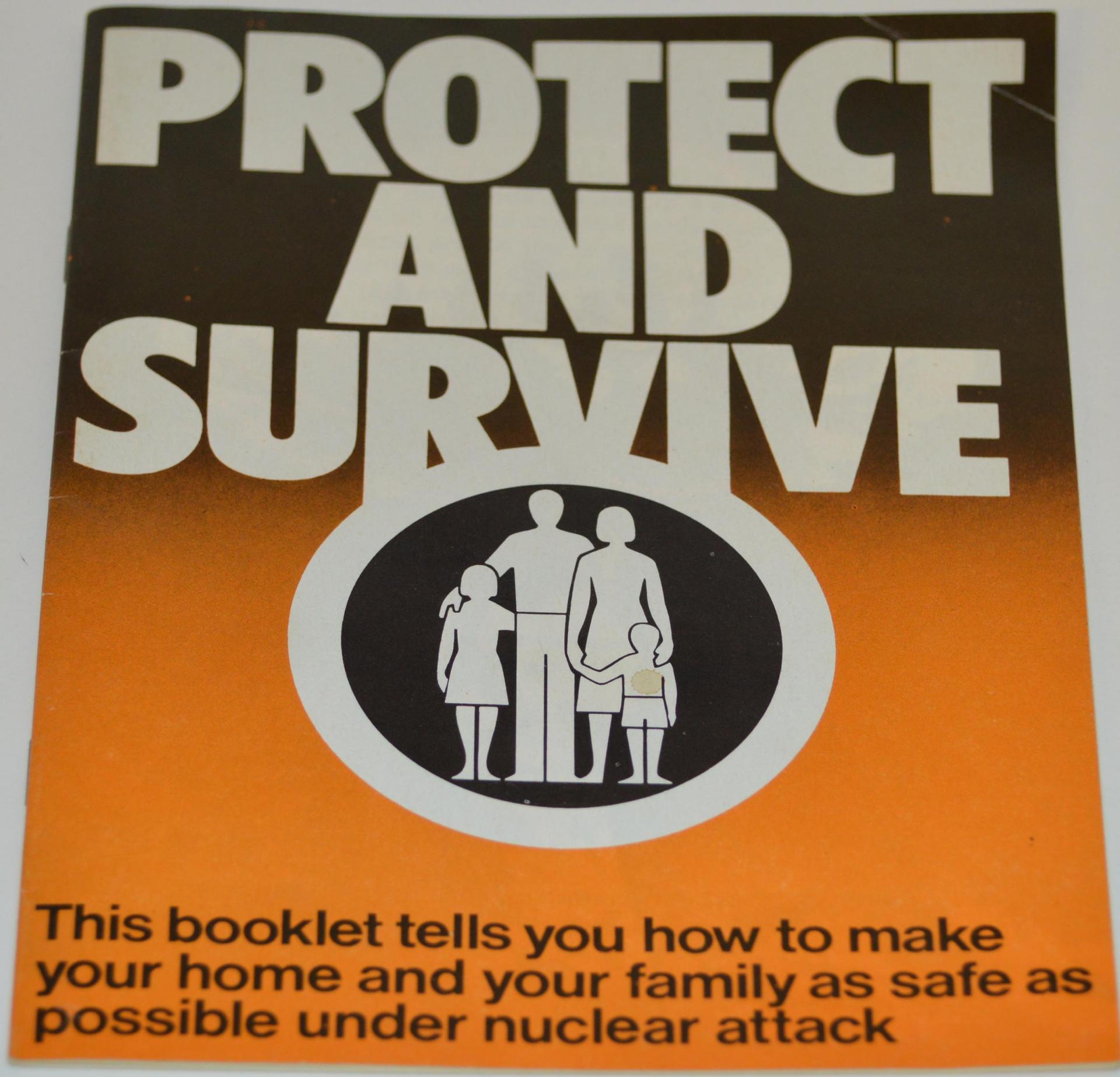 Inside are items, such as little booklets. ‘Protect and Survive’ is a booklet which tells you outrageous things like bricking your windows, and putting soil bags in you fire place to keep safe from radiation. Most of these things wouldn’t make a difference in the event of a nuclear attack, it was written by a civil servant who was told to make something for the public and I wouldn’t be surprised if he didn’t know anything about nuclear weapons and the affects.
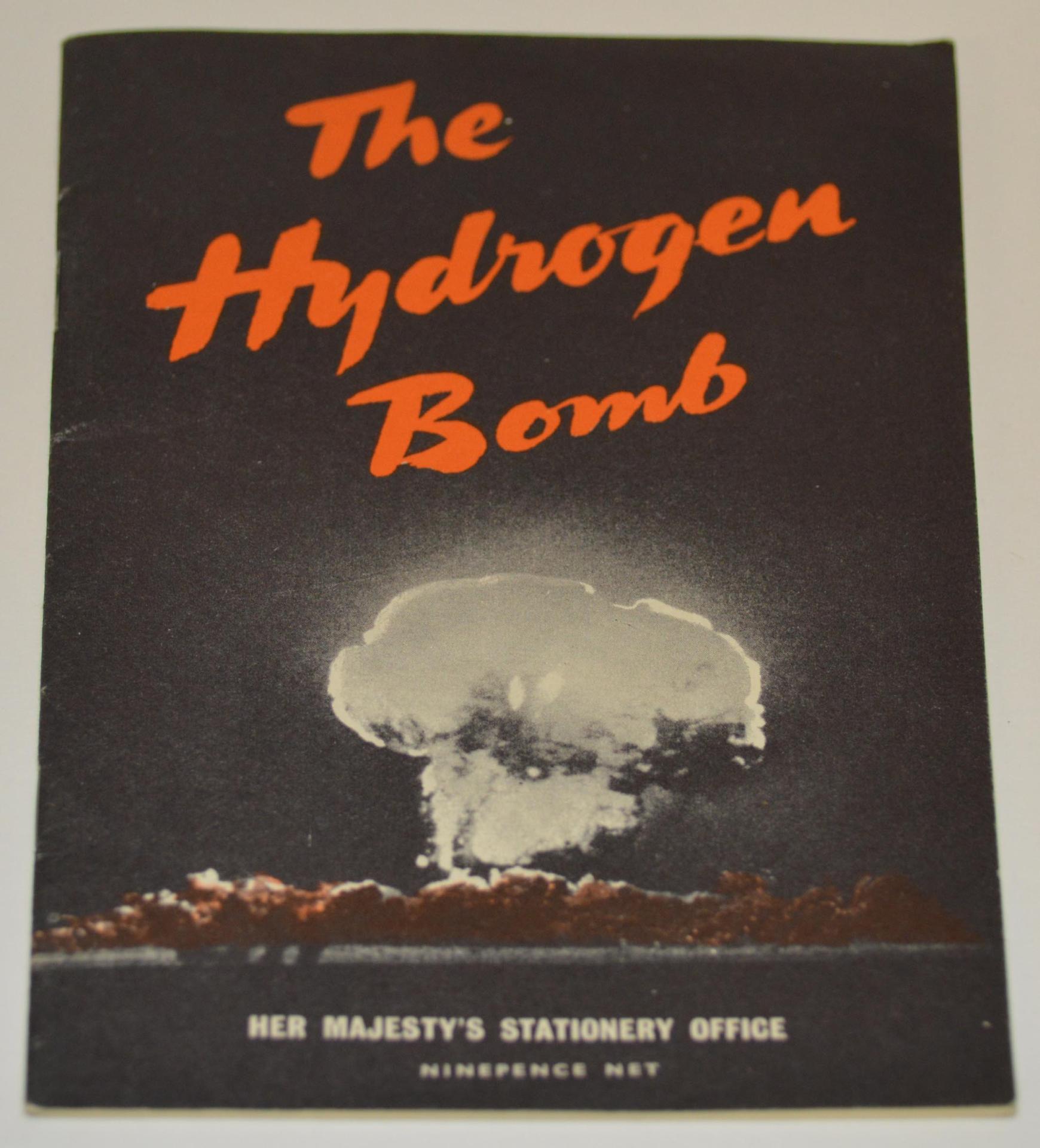
Booklets giving information about the Hydrogen bomb and Neutron bombs were also available to the public, it wasn’t the best of idea since it probably would have caused panic.
There are also books of notes for military services. Most of the documents are for the scientists and is extremely advanced so I can’t understand it. There are also restricted documents, booklets and letters.
There are three pages at the start of the booklet (These pages must remain secret) which tell you to take out the title, the contents, and several chapters and what to replace them with, as well as a circular diagram to work out how much radiation you have absorbed.
It’s amazing to think that only people high up would see this information and that some of this stuff was only handled and discussed about in secret.
One book disscusses farming in a nuclear winter. I couldn’t quite understand what was being talked about in this booklet but I do wonder if it is possible?
Patrick Cook
Volunteer
Duke of Edinburgh Bronze Award.