

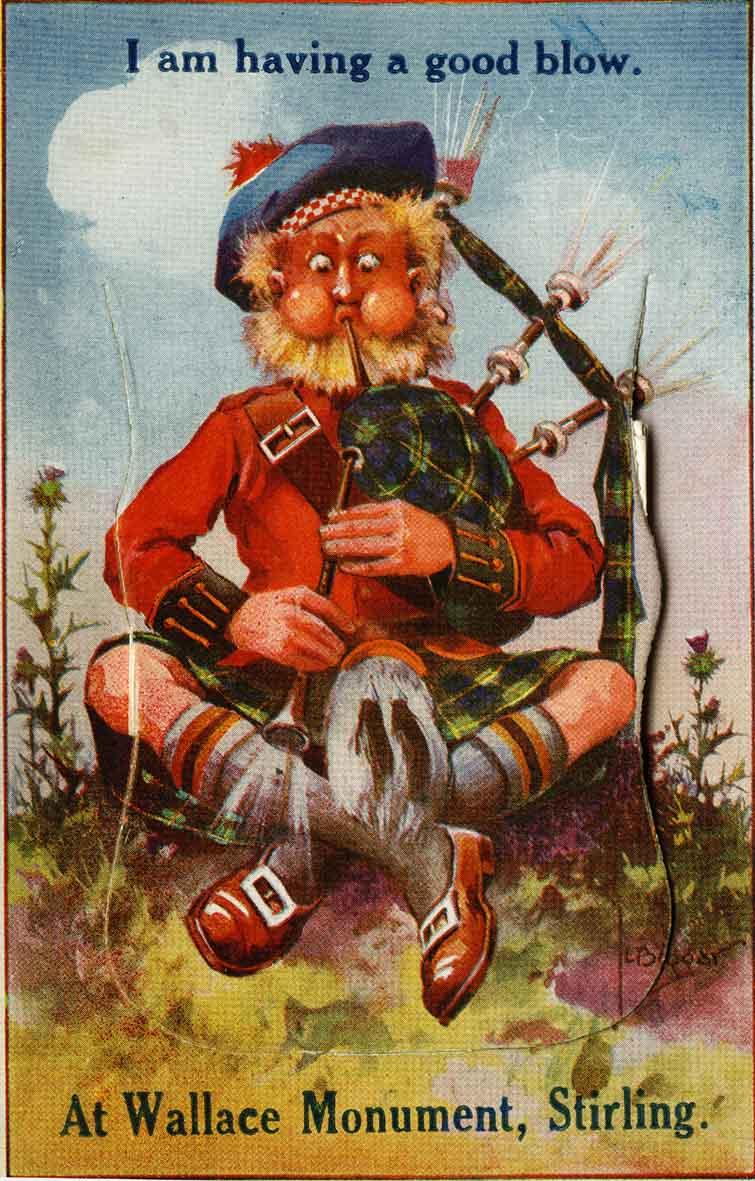
 This month, the Wallace Monument curators themselves are having a good blow, as it is 155 years since the foundation stone was laid on 24 June 1861. This was one of the biggest public events in 19th century Scotland, and it is unlikely that Stirling will ever again see this kind of show – stopping ceremony. It involved 83 separate groups, starting with 16 companies of rifle volunteers, followed by 17 curling clubs, Free Gardeners, Oddfellows, St Crispin Lodges, 20 municipal authorities led by the Provost and magistrates of Stirling, the Seven Incorporated Trades and the Guildry, followed by aristocratic representatives with the surviving swords from the War of Independence, and the Masonic lodges.
The establishment of the National Wallace Monument in Stirling was a triumph, after decades of bickering between interested parties in Glasgow and Edinburgh, and Stirling has never looked back. The Wallace Monument is such a part of Stirling’s landscape that Stirling is unimaginable without it.
This postcard was sent by a tourist on 17 July 1922. Under the piper’s kilt is a concertina of 12 small images of Stirling’s famous landmarks. We should not leave the Wallace Monument to visitors. Stirling citizens should visit the monument at least once a year to enjoy all it has to offer.
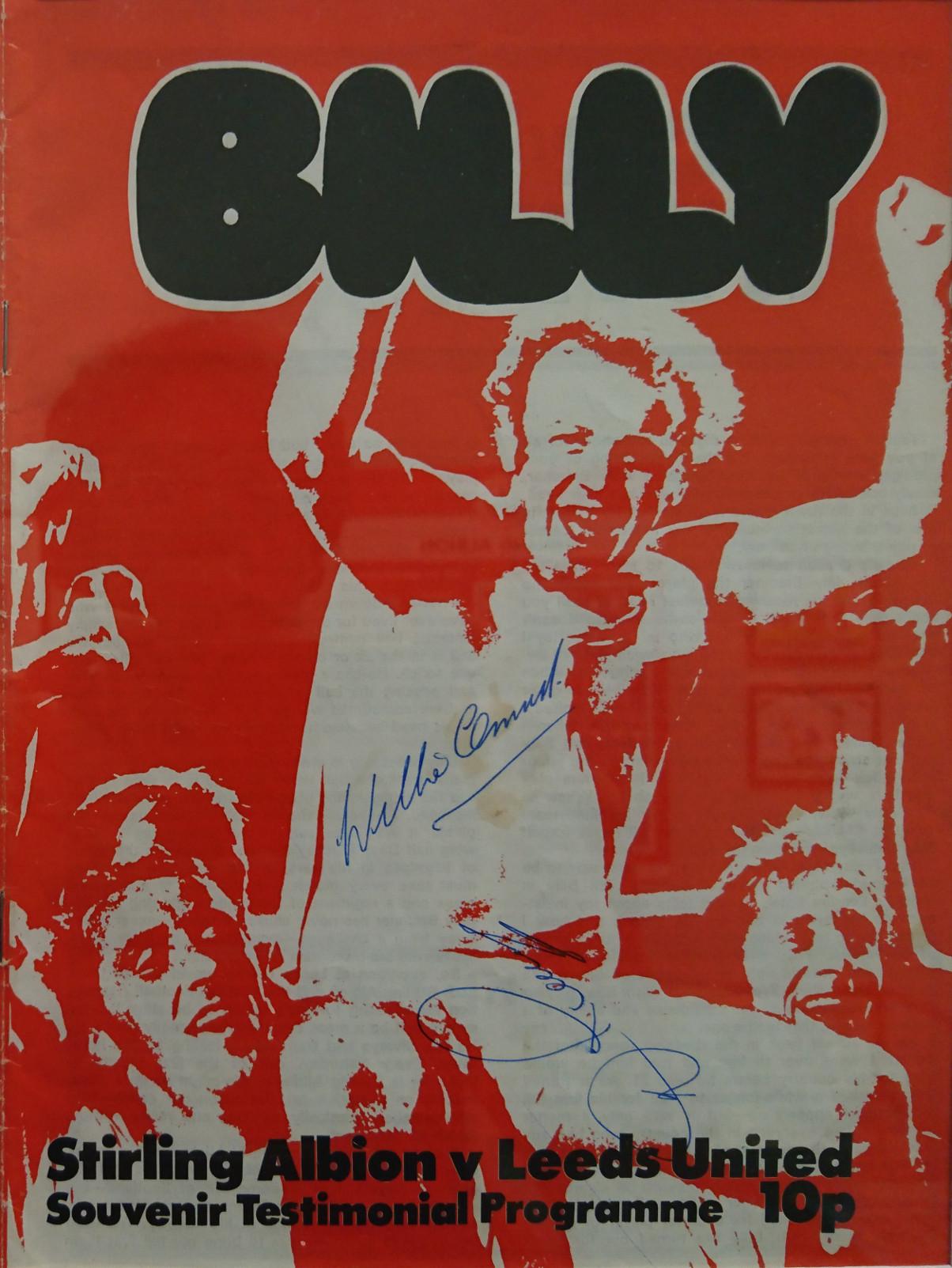 Shown here is Bremner’s Testimonial Programme for the match played in Stirling at Annfield on 30 October 1973.
The programme was gifted to the Smith by Albion fan Jim Thomson, and before now, there has been nothing in the Smith collection to represent this great footballing hero. It is part of the exhibition on Stirling Albion’s ground breaking trip to Japan in 1966, when the team made history by being the first British footballers to play a match in Japan in the post war years. The exhibition continues until 31 July.
The late, great Scottish Champion football mid field player, Stirling man Billy Bremner (1942 – 1997).
His football career started in Govanhill United, and as a young man of 17 he was signed for Leeds United. He played for Leeds from 1959 – 1976, became captain of the team, and gave it a really successful time, winning a lot of silver. He was proclaimed Footballer of the Year by the Football Writers Association in 1970, and is Leeds United’s greatest player of all time. He served as Leeds Manager, (1985 – 1988), there is a statue of him outside the Leeds grounds.
Bremner was a footballing legend in every sense. He is included in the Football League 100 Legends and is a member of both the Scottish Football Hall of Fame and the English Football Hall of Fame. He won more than 50 caps for Scotland and is on the Scottish national football team Roll of Honour.
‘The Windsor of the North’ provides a reminder of how much the promotional and destination marketing Stirling has moved on since the 1930s.
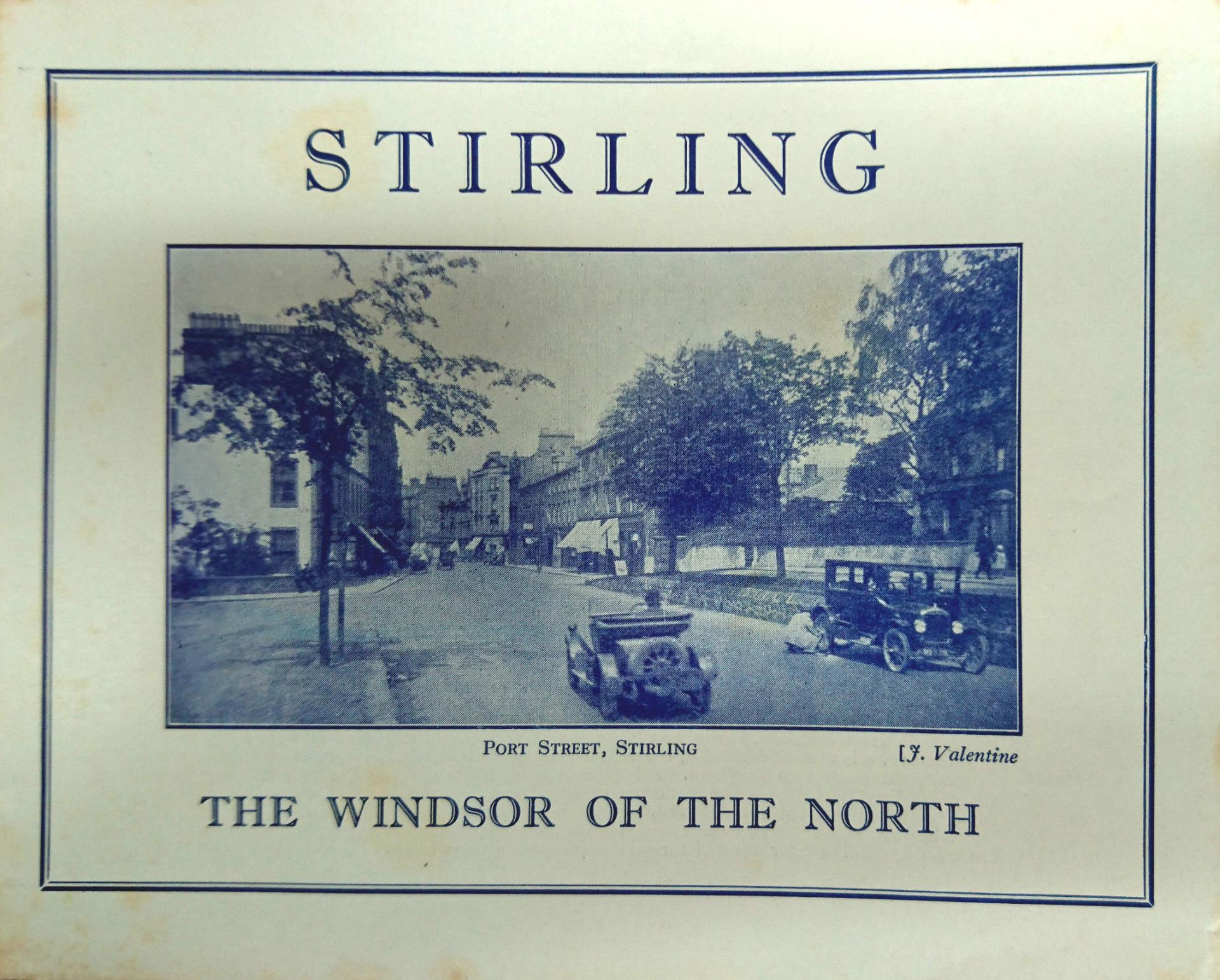
This is from the cover of a brochure discovered in the Oxfam Bookshop by Friend of the Smith Frances Chatfield last week. The booklet was produced by the London and North Eastern Railway to attract travellers to Kings Cross and the east coast line. Return tickets to Stirling were available for four shillings (first class) or two and sixpence (third class) with a “Luggage in Advance” service, collected conveyed and delivered for two shillings per package.
If ‘Windsor’ conjures up the idea of Merry Wives and yellow soap for some, it was a comparator which appealed to travellers from the south. The attractions of Stirling were listed as the 60 year – old Golf Course, the Kings Park, Tennis Courts and Putting Green, fishing opportunities, two theatres and three picture houses. Day trips to the Trossachs, Loch Katrine and Loch Lomond are also listed.
Stirling was promoted as a peaceful place, and a guide book could be obtained by writing to the Town Clerk. Port Street is still recognisable – the buildings on the left remain, but the opportunities of changing a tyre there, as the motorist on the right is doing, are now limited!
Established in 1858, Stirling Bowling Club is one of Stirling’s oldest sporting organisations. The Green was the first site to be developed on the north side of Dumbarton Road. Stirling architect William Simpson (1809 – 1890) designed the Club House, which was built in attractive coloured brick and opened in 1866. Simpson was also architect for the Albert Halls and among his many other buildings are Norrieston, Ardoch and Dunipace Parish Churches.
In many ways, the history of the Bowling Club is like a micro – chronicle for Stirling, preserved in the names of its trophies. The Campbell – Bannerman trophy was presented by Stirling’s MP and later, Prime Minister; the Lawson Memorial Cup keeps alive the name of Lawson’s Stores in Baker Street; the Detention Barracks Cup is a reminder that the staff of the building now known as the Old Town Jail were bowling club members until the Barracks closed in 1936; the Peter Gray Trophy of 1944 keeps fresh the name of Provost Macfarlane Gray and his accountancy firm.
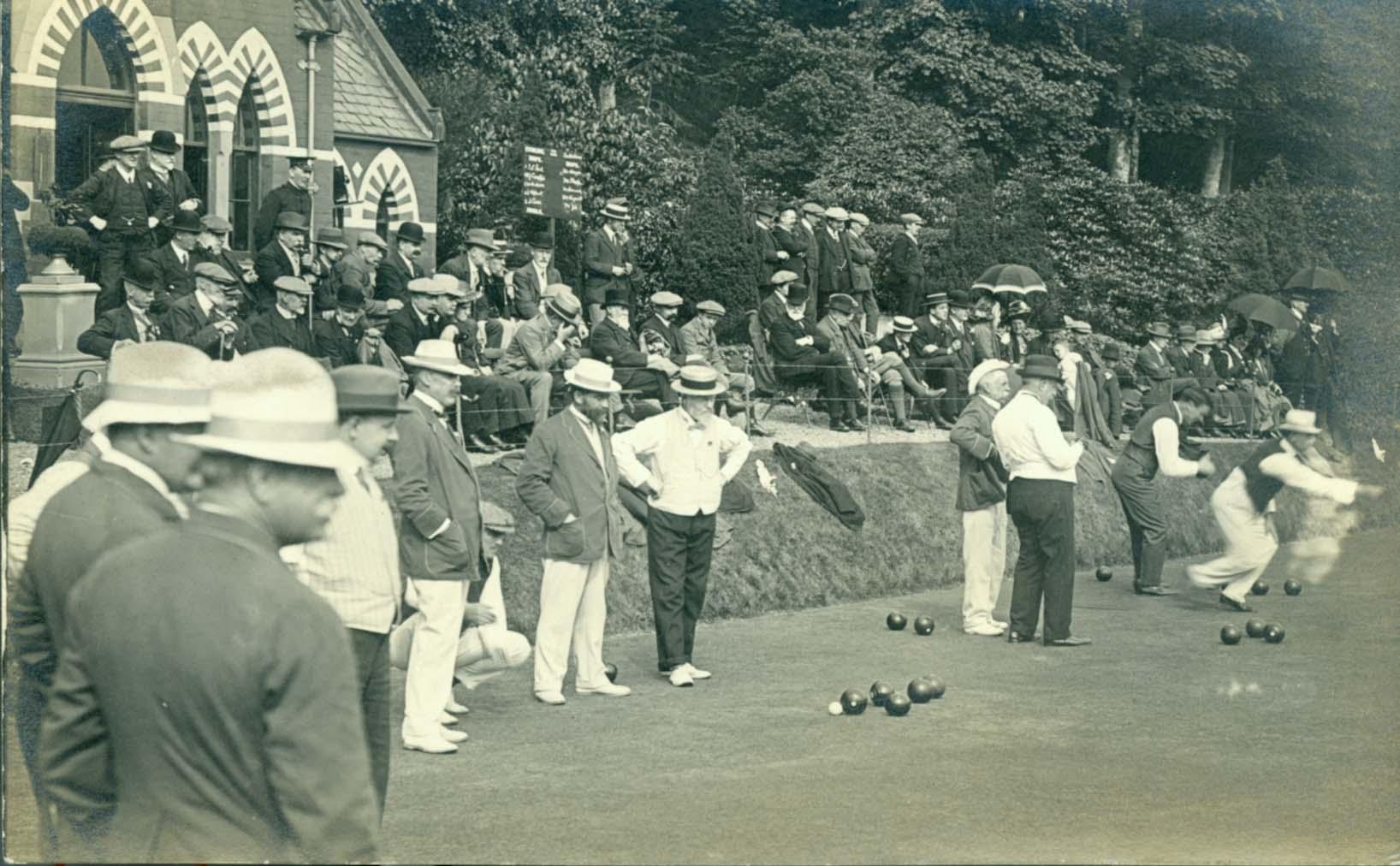
The photograph shows a match between a Canadian touring team and Stirling Club members on a bright sunny day in 1904. Two lady spectators (women were admitted as players only in 1977) have parasols raised to protect themselves from the sun.
Stirling Photographers
Today’s story centres on a photograph of the road which is now Ochil View in Menstrie. It is one of about 450 plate glass negatives, which came without any information from the estate of the late Henry Robb (1933 – 2016). Fortunately, the donation coincided with the internship of Nele Thorrez, a photography graduate from Poelkapelle, Belgium, who for the past few weeks has digitised the plates and researched the background history, working for the Stirling Smith.
The photographs were taken by Thomas W J Leishman (1885 – 1965) of Park Terrace. Although Leishman was not a photographer by profession, he had an obvious talent.
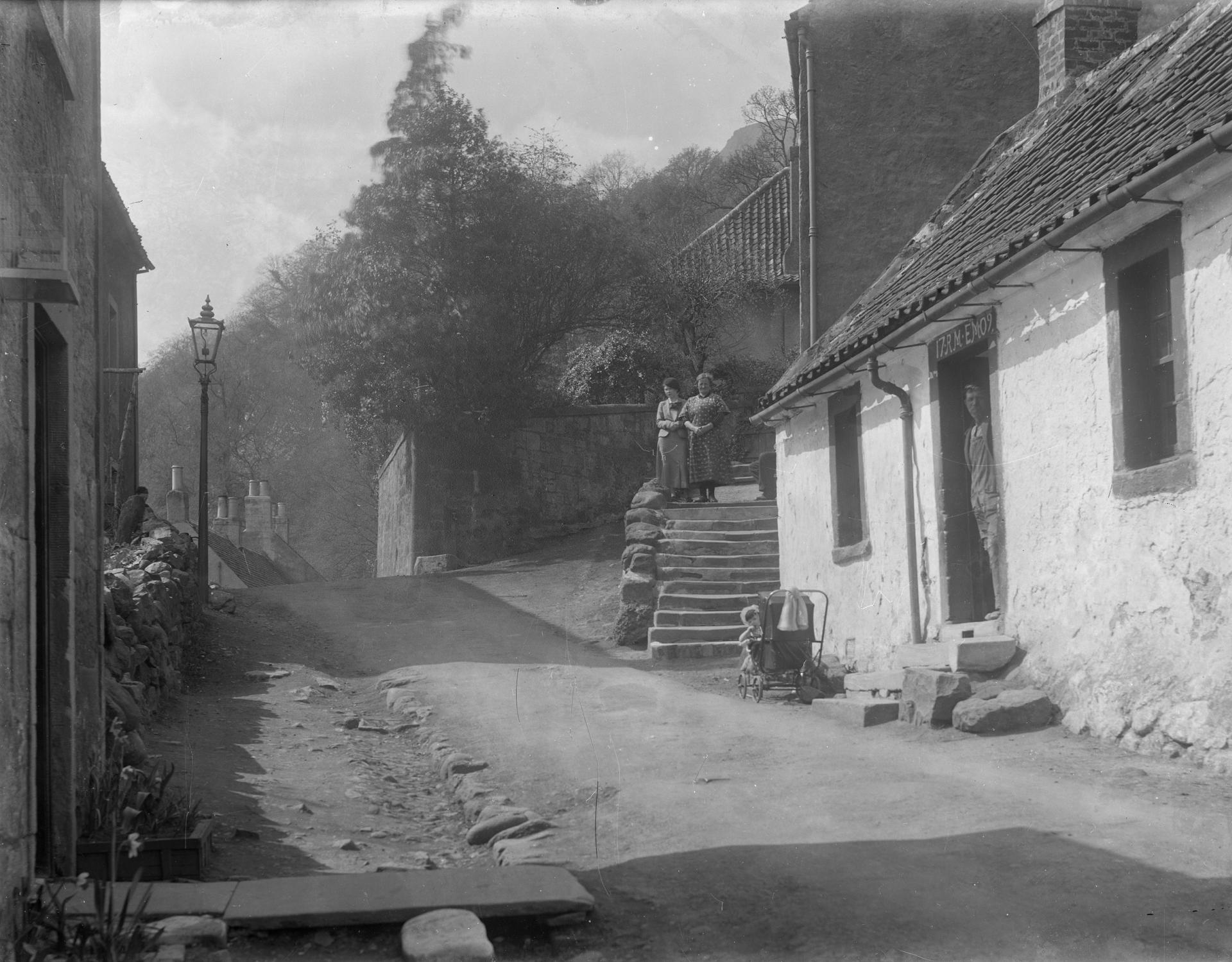 Nele has uploaded the images to FaceBook and Pinterest and asked for help in identifying the locations. May people commented on the Ochil View photo before the identification was successfully made. The cottage on the right has a marriage stone door lintel inscribed RM EM and the date 1709, but all of the old housing has been demolished and the road tarmacadamed.
The Smith is reliant on public help and the talents of many young Europeans studying the collections. Next Tuesday, 31 May at 12 noon, Nele Thorrez and Zita Barbaczi from Hungary will both give a talk on their work at the Smith.
With the tourist season here, it’s worth taking a look at what attracted visitors to Stirling in the past. This postcard dates to 1910, features tartan and Scottish harebells and celebrates the Links of Forth.
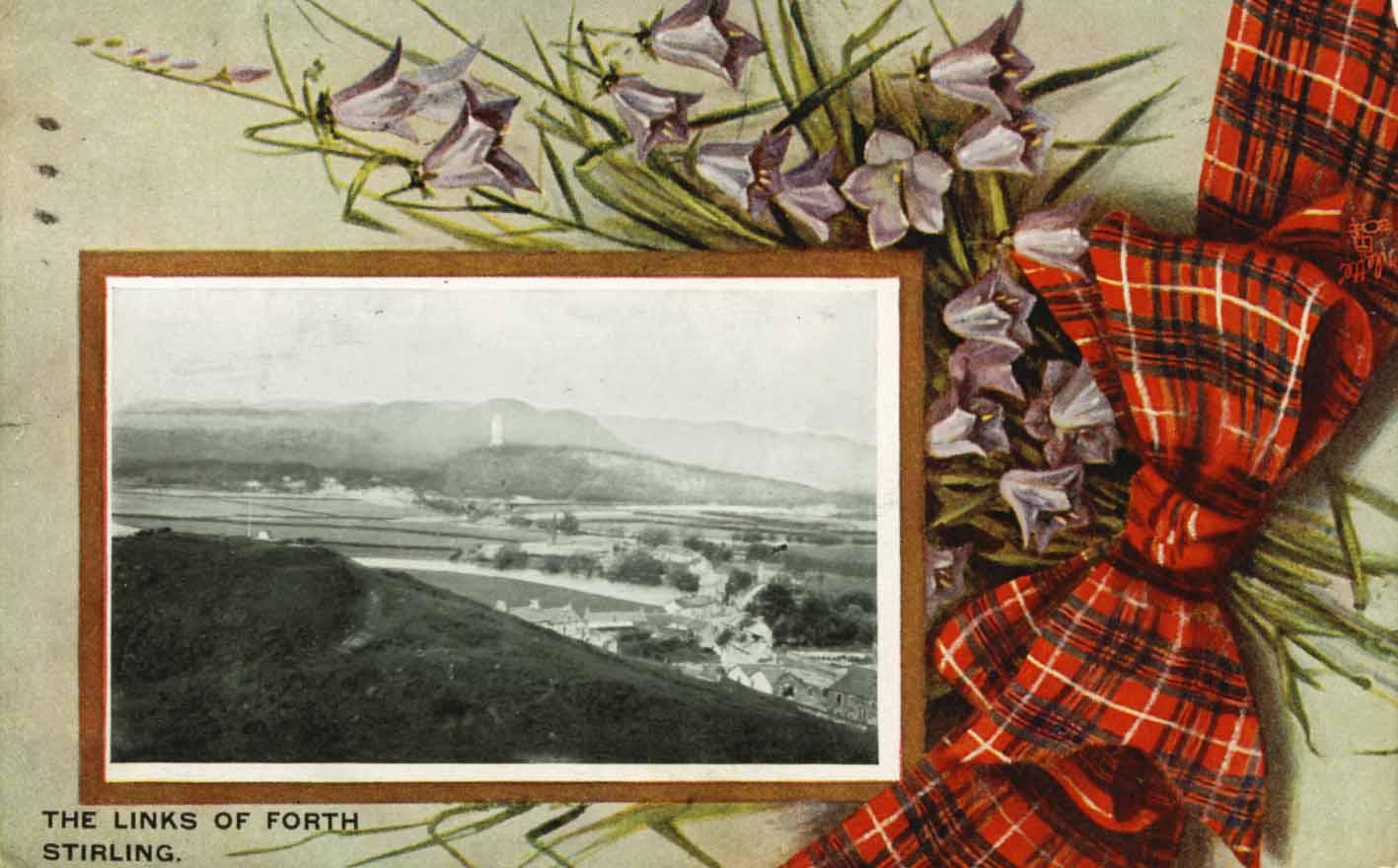 The view of the winding river from the Castle craig or the Abbey craig is what visitors came to see. The poet Arthur Johnston (1597 – 1641), writing in Latin, compared the windings of the Forth to the River Maeander of Homer’s Illiad.
Robert Burns came here in August 1787, and wrote to his friend that “just now, from Stirling Castle, I have seen by the setting sun the glorious prospect of the windings of the Forth through the rich carse of Stirling, and skirting the equally rich carse of Falkirk.” This was the inspirational landscape that the tourist wanted to visit. This was the riverscape that the exile and the emigrant wanted to remember. The poet Hector MacNeill, before he departed for the West Indies in 1796 wrote his poem “The Links of Forth”, a work of forty-nine verses describing and extolling this part of the river’s beauty and industry.
Since the loops of the Forth ‘worth an earldom in the north’ have been built upon, the river has been obscured and the view is not as dramatic as it once was.
Agnes Wilson and her husband John Jaffray (died 1836) were well–known Stirling people.
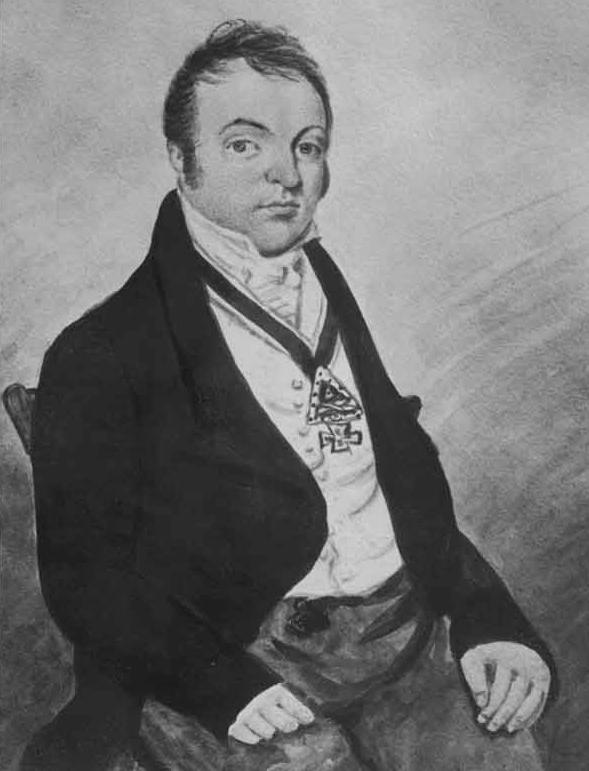 John was a weaver and spirit dealer who married Agnes in 1808. He was the son of the famous William “Citizen” Jaffray (1749 – 1828), supporter of the French Revolution who made it his mission to vaccinate children in Stirlingshire against smallpox, at a time when the disease killed one in four children. He saved an estimated 4000 lives. John Jaffray’s own son, Sir John Jaffray (1811 – 1869) was equally famous as the owner of the Birmingham Daily Post and funder of the Jaffray Hospital, the Women’s Hospital and the Children’s Hospital, all in Birmingham.
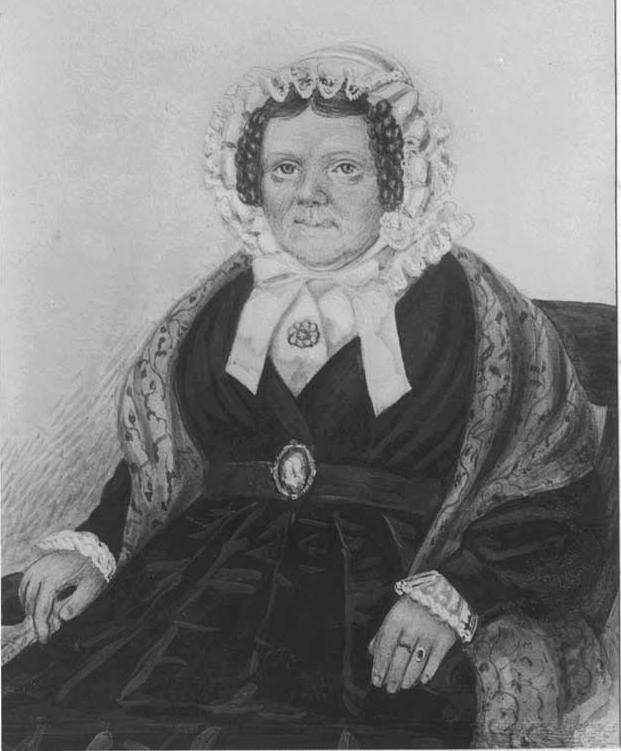 Agnes is described as ‘a stout neat little woman who was a picture of tidiness’ and kept the well-known Pie and Porter shop at 13 Baker Street. This was in a 17th-century tenement, demolished in 1900. A stone from the shop survives in the Stirling Smith collections. It is inscribed ‘HEIR I FORBEARE MY NAME OR ARMES TO FIX LEAST I OR MINE SHOULD SELL THOSE STONES AND STICKS’. This was a challenge to the Craigengelt family, who had fixed their coat of arms on the neighbouring tenement, which still survives in Baker Street to this day.
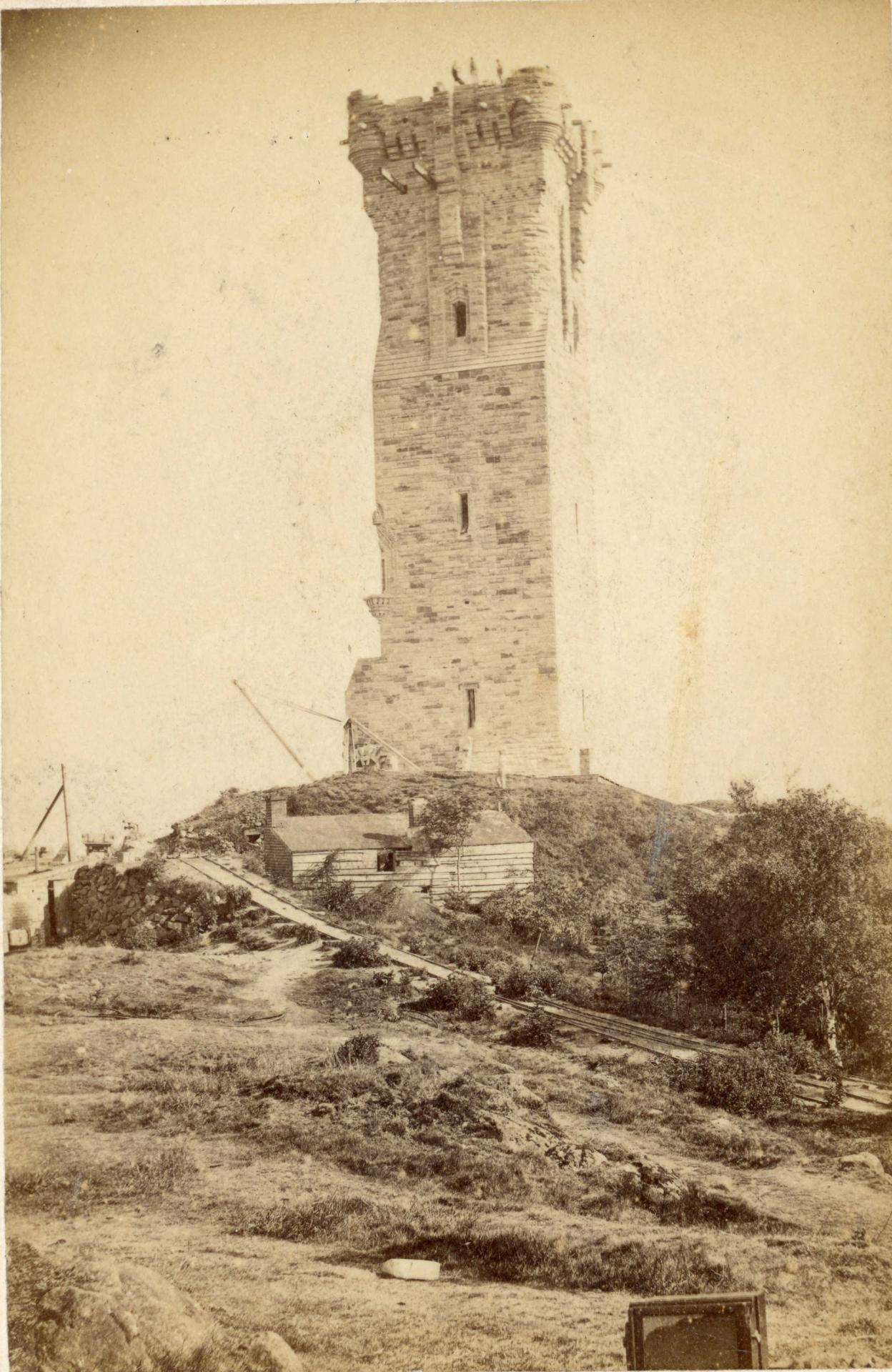 This is the Year of Architecture, when the National Wallace Monument will be celebrating the 155th anniversary of the laying foundation stone, 24 June 1861. It was one of the biggest public events in 19th century Scotland, and was followed by one of the longest building programmes. The Monument was completed 8 years later in 1869.
The image of the incomplete monument was taken by pioneer Stirling photographer Alexander Crowe of 33 Murray Place. Although small, it clearly shows three workmen near the top of the tower, the builder’s hut beneath and the rail for carting the stone to the top of the Craig.
When the money for the construction ran out, the tower sat incomplete for years, with a thatch covering provided by Hillhead Farm, Cambusbarron. In 1865 with the continuing embarrassment of an unfinished structure, it was proposed that the project should stop and the materials be sold at auction. A further fund raising campaign secured the completion.
This rare photograph is from the estate of the late Henry Robb, solicitor, ornithologist and Friend of the Smith. A sale of his fine collection of Stirling history books will be held in his memory on 12 November, in aid of the Smith purchase funds.
The exhibition of twentieth century art from the Stirling Smith’s collection continues. Featured prominently is this work by Helen Flockhart, who graduated from Glasgow School of Art in 1985.
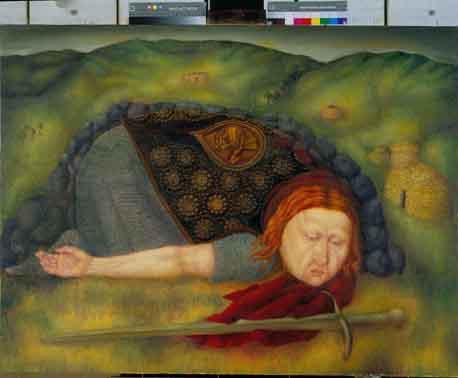
Since then she has built a formidable reputation through numerous exhibitions in Britain, Europe and America. Her rich, meticulously crafted paintings are charged with an arresting power. It is a power that derives not merely from the extraordinarily detailed execution of each work but also from the idiosyncratic iconography that the artist has evolved. Flockhart’s pictures conjure up a vivid world, at once familiar and strange.
Helen Flockhart’s work is held in numerous private, corporate and public collections, including the Gallery of Modern Art, Glasgow, Edinburgh City Arts Centre and the Fleming Collection of Scottish Art, London.
This work, titled ‘Legacy’ was a purchase prize entry in the Smith’s Brave Art exhibition of 1996, on the theme of William Wallace and the Battle of Stirling Bridge, 1297. A slain figure with the symbols of Wallace – the great sword and the winged dragon, which is usually represented as part of his helmet – is pictured as becoming a Celtic round house, like others on the landscape, suggesting that his story is a main building block of Scottish history. The exhibition runs until 14 August.
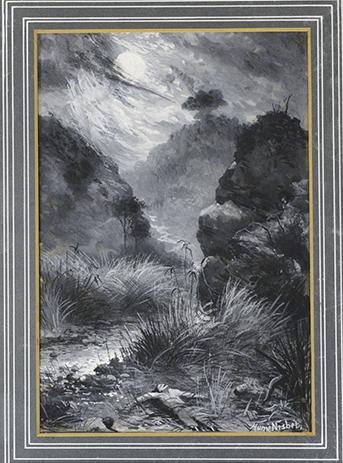 One of the tasks of the Stirling Smith Art Gallery and Museum is to collect and show the works of important Stirling artists. ‘The Nightmare’ is a recently purchased gouache by Stirling born artist and writer James Hume Nisbet (1849 – 1923) who is largely unknown in Scotland today, but is recognised as a significant figure in Australian cultural history.
Nisbet was the son of James Nisbet, house-decorator, and his wife Jane, née Hume. He emigrated to Australia at the age of 16. He had an artistic disposition and became an actor at the Theatre Royal in Melbourne, and spent time exploring Australasia, returning to Britain in 1872. He then studied and practised art, moving back to Scotland in 1873, where he married Helen, daughter of the sculptor Andrew Currie who did the Bruce statue on Stirling Castle Esplanade. From 1878 – 1885, he taught drawing at the Watt Institution (now Herriot Watt University). In 1886 he was commissioned by the publishers Cassell & Co. to go back to Australia to draw and write for their publications.
In total, Nisbet wrote and illustrated forty-six novels, about half set in Australia. He also wrote four volumes of poetry, five books on art including Where Art Begins (1892), collections of short stories, and travel books. He was the Alasdair Gray of his day, but in an Australian context and a good example of how Stirling people have often shaped the world.