

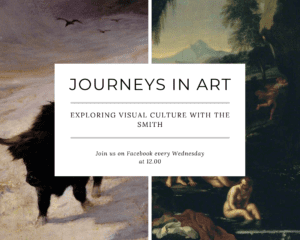
 The Stirling Smith is launching a weekly art history video series beginning on 17 June. While the museum is closed we still feel it is important to produce engaging content for the community. We hope that you will enjoy this introduction to art history series.
What was rebellious about the Impressionists? Why was Bonnie Prince Charlie often painted wearing tartan? What can cave paintings tell us about the invisible hands that created them? Each week we’ll explore different aspects of history using artwork from museums and galleries all over the world.
Journeys in Art will consist of a 15-20 minutes presentation plus time for questions from our virtual audience. They will be broadcast via Facebook Live on our Facebook page Wednesdays at noon. Please join us for our first exploration on 17 June!
 Together with a local mindfulness business, Tranceform Therapies, the Stirling Smith has been hosting free online mindfulness sessions on our Facebook page.
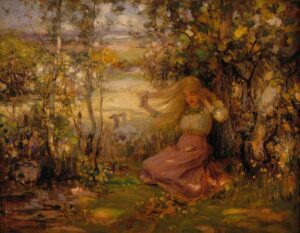
The sessions, which began on 13 May, take place every second Wednesday via Facebook Live and look at a different painting each time. The first session focused on A Spring Idyll by the Scottish artist Thomas Bromley Blacklock and received some great feedback.
‘We are committed to enhancing health and wellbeing through engagement with our collection and had been planning on creating mindfulness sessions in our galleries this summer,’ said Nicola Wilson, the collections manager at the Smith.
‘Our exhibitions officer has been attending online mindfulness sessions with Louise Cullen from Tranceform Therapies during lockdown and simply asked if she’d be interested in working with us and our collection to bring these sessions online.’
Cullen is a mindfulness coach and runs her Tranceform Therapies business from her home in Stirling. She has a worked with a range of organisations, including Prudential, Creative Scotland, Moet Hennessey, and BenRiach Distillery, on programmes to support their health and wellbeing strategy.
The sessions are free to attend and will last 30-45 minutes. To join, go to the event page and select ‘attend’ if you have a facebook account and you will receive a notification when the video is live. If you don’t have an account, just go to that page at 7pm Wednesday 10 June or 24 June. If you would like to see and experience the past sessions, the videos can also be found on the event page. We hope to see you at the next Mindful Art session on Facebook!
The Stirling Smith Poet in Residence, Dr John Coutts, judged over 80 entries to our competition on the National Poetry Day theme of CHANGE.
A large audience of families and public enthused about his tips and comments and learned from each other in a fun-filled hour in the Smith Theatre.
There were 18 highly commended and runner-up finalists.
The six placed first were:
Milly P2 from Riverside Primary
Joseph P5 from Allan’s Primary
Rosie P5/6 St Mary’s Primary Dunblane
Astrud P7 St Mary’s Primary Dunblane
Anna P4/5 Dunblane Primary
Becca P6 Dunblane Primary
Click links below for complete individual poems.
Highly Commended – Iona 9yrs Dunblane Primary Highly Commended – Erin P6 Dunblane Primary Highly Commended – Evie P4-5 Dunblane Primary Highly Commended – Hannah P6 Dunblane Primary Highly Commended – Caleb P4-5 Dunblane Primary 1st – Astrud P7 St. Mary’s Dunblane Highly Commended – Logan P7 St. Mary’s Dunblane Runner-up – Phyllis P6 St. Mary’s Dunblane Runner-up – Alasdair P6 St. Mary’s Dunblane Highly Commended – Ronja P6 St. Mary’s Dunblane Highly Commended – Pippa P5 St. Mary’s Dunblane Highly Commended – Rose P6 St. Mary’s Dunblane Highly Commended – Luca P6 St. Mary’s Dunblane Highly Commended – Oliver P2 Riverside Highly Commended – Eva P2 Riverside Highly Commeded – Freya P2 Riverside Highly Commended – Faye P5 Allan’s Highly Commended – Olivia P5 Allan’s 1st Joseph P5 Allan’s 1st – MillyP2 Riverside 1st – Rosie P5 St. Mary’s Dunblane 1st – Theo P7 St. Mary’s Dunblane 1st – Anna P 4-5 Dunblane Primary 1st – Becca 10yrs Dunblane Primary
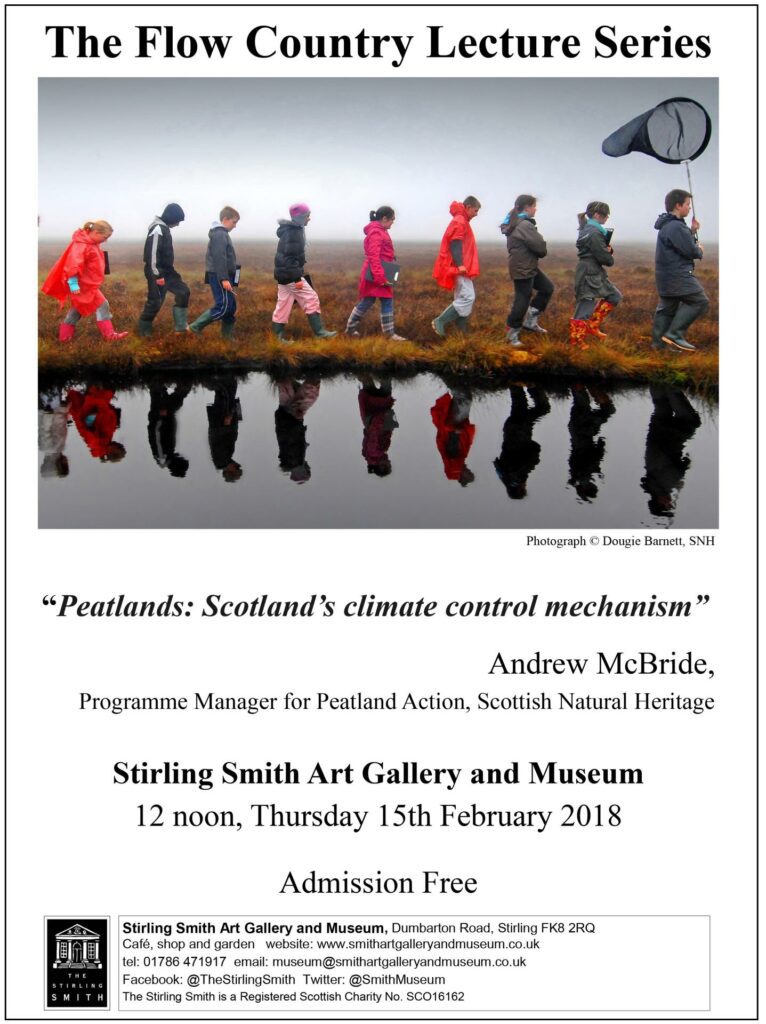 The series of talks by specialists continues on Thursday 15th February when at 12 noon, Andrew McBride, Peatland Action Programme Manager will speak on Peatlands: Scotland’s climate control mechanism at the Stirling Smith Art Gallery and Museum. Andrew is based at Redgorton, Perthshire, with Scottish Natural Heritage.
For those attending the talks, it has been a learning curve. Last week, Rebecca Crawford, Peatlands for People Project Officer, based in Stirling, was speaking on Wester Moss, the Bog Squad and Butterflies. The existence of Wester Moss in Fallin, near Polmaise 3 & 4 Pits, was news to some of the audience. It is a raised bog, as opposed to the blanket bog shown here. A conservation initiative with many volunteers is restoring the life of the bog by removing the trees and the scrub. This relatively small bog captures an estimated 600,000 tons of carbon beneath its mosses and waters, transforming it into peat. An apparent ‘wasteland’, it supports 134 different species of butterflies and moths, as well as creatures such as the bog sun jumping spider. The latter is found in only five places in Scotland, and Wester Moss is one of them.
The Flow Country touring exhibition is presented by the Peatlands Partnership, working with the Heritage Lottery Fund, the RSPB, Scottish Natural Heritage, the Highland Council and the Environmental Research Institute. It runs until 11 March.
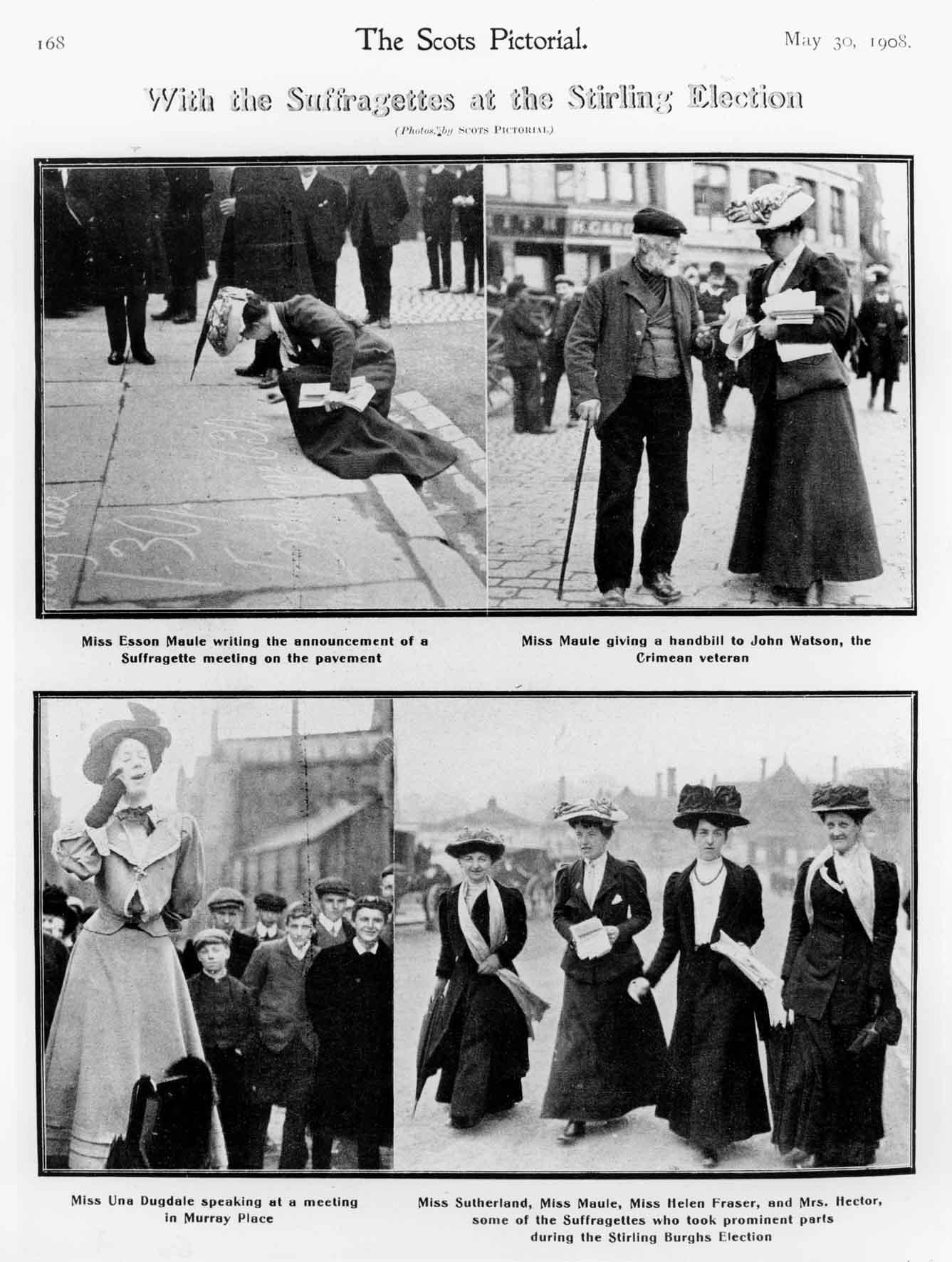 In the years leading up to the Great War, Stirling was a hot bed of suffragette activity. With the death of Prime Minister and Stirling MP Sir Henry Campbell – Bannerman in April 1908, suffragettes of every party converged on Stirling to fight the Stirling and Dunfermline Burghs by-election. Campbell – Bannerman had been an opponent of women’s suffrage. His successor, A H W H Ponsonby, also Liberal, was no different.
The Great War 1914 – 1919, which was sustained by female labour at home, demonstrated the strengths and capabilities of women.
After two centuries of struggle for equal voting rights, the Representation of the People Act (1918) was given royal assent on 6 February. It was a partial victory, as women voters had to be 30 years of age or older, but it was a landmark. Almost a hundred years to the day, there will be celebrations when tomorrow at 2pm, the distinguished historian Bernadette Cahill gives a talk in the Stirling Smith. She has published on American Women’s Suffrage history, and will talk about some little – known episodes in the history of the Scottish suffragettes. This will be followed by equali – tea and special biscuits to mark the day. Admission and parking is free, so join us in the celebration.
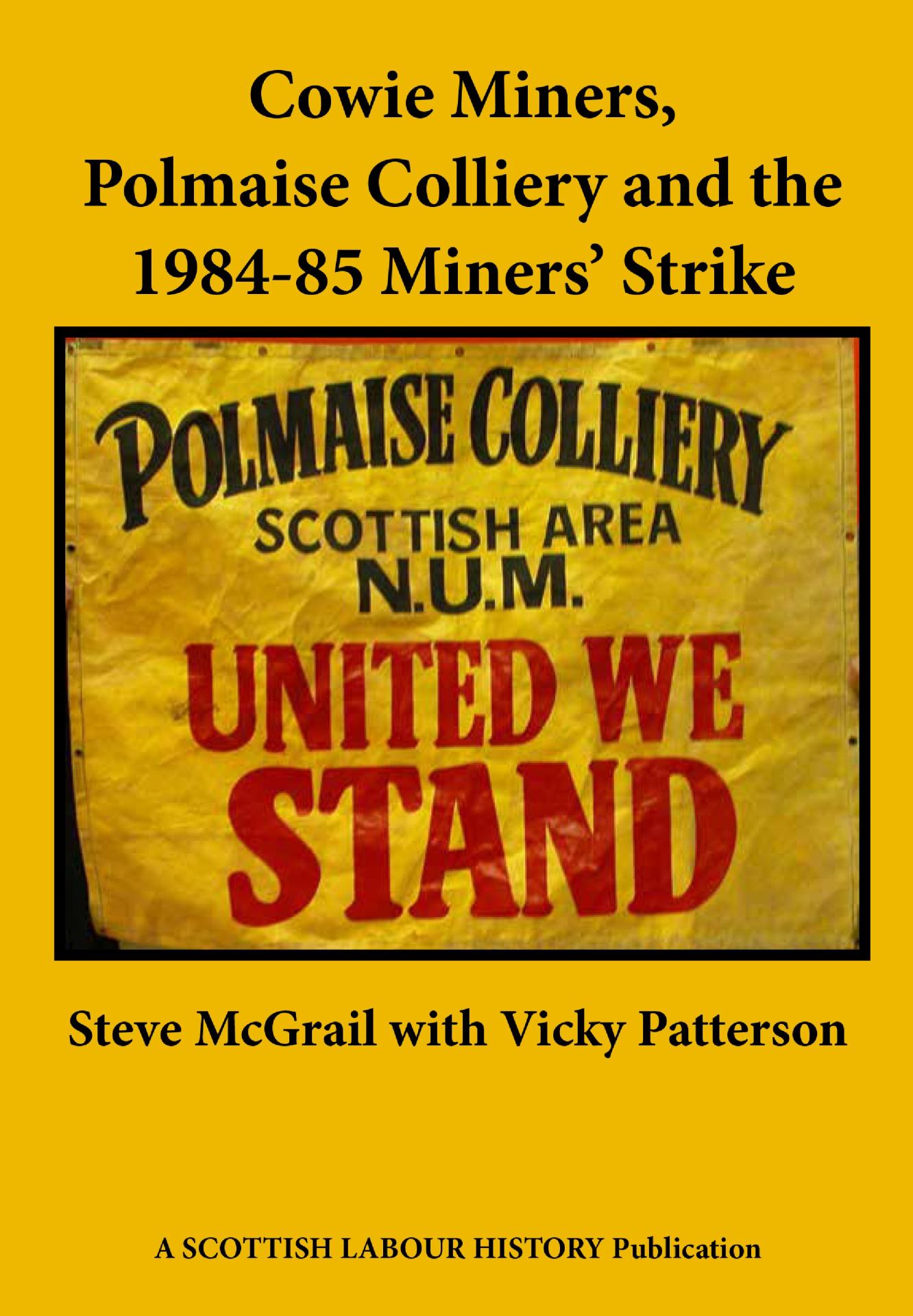 At 3.30pm on Friday 2 February, the Stirling Smith hosts the launch of an important Stirling book. This book collects two pamphlets, ‘For as long as it takes!’ Cowie Miners in the Strike, 1984-85, originally published in 1985, and One Year On. Sacked Polmaise Miners Speak Out, published in 1986. ‘For as long as it takes!’ was written by Steve McGrail and Vicky Patterson, who were partners at the time. One Year On was edited by Steve.
Vicky died in 2003 and Steve died in 2016. The book is published jointly by Sue Harley, Steve’s widow, and the Glasgow – based Scottish Labour History Society. The pamphlets are reproduced in the original sequence of their publication, with an afterword by Jim O’Hare, one of the sacked men whose testimony was not included at the time. Eleven men with a collective service of 219 years in the pits were sacked and suffered discrimination in the years which followed.
Although there are many books on the 1984 – 5 Strike, most are written from a southern perspective and few acknowledge or even mention the part played by the Stirlingshire Miners. Polmaise was the first colliery to come out on strike, and the last to return.
This is a free event, so come along and learn more.
For over 10 years, a group of readers has been meeting at the Stirling Smith Art Gallery and Museum under the guidance of Dickens expert Professor Grahame Smith to read the works of Charles Dickens. They have read every work by Dickens and have now moved on to other classics of English literature.
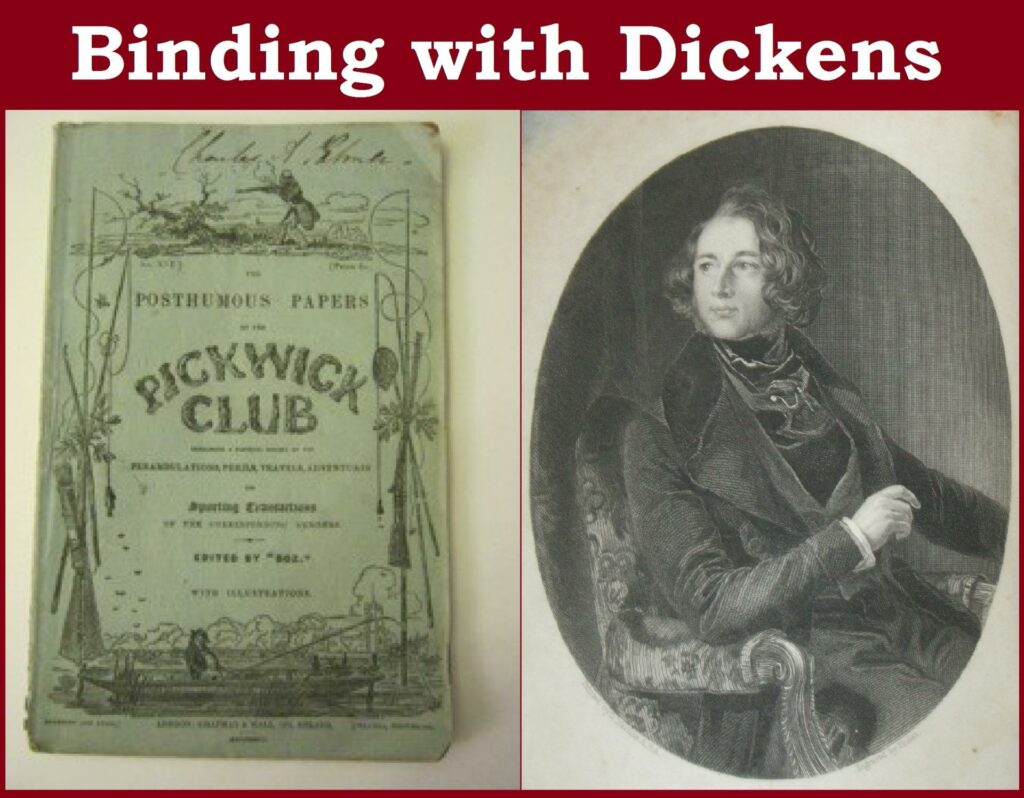
As a special Christmas treat on at 12 noon on 6 December, Learning Officer David Smith and his brother Paul, who is a book binding specialist, will unpick a mystery associated with Dickens’ early career. Charles Dickens became famous at the age of 24 with his first block busting novel The Pickwick Papers. Some of his success was due to the illustrator Robert Seymour (1796-1836) who, following an argument with Dickens, killed himself. The issue of Dickens role and responsibility for this suicide has been hotly contested since.
Pickwick was originally issued in serial form to be bound later by the bookbinder. The original physical structure of the first edition of Pickwick provides clues to this tragedy.
Paul and David Smith will review the evidence on Seymour’s suicide. The real story behind this is not what has been widely assumed.
This is a one off special event. Tickets are limited and booking is advised. Book your place here.
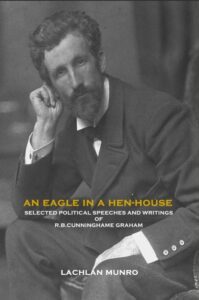 St. Andrew’s Day is officially celebrated as a public holiday in Scotland thanks to the work of Stirling politician Dennis Canavan and his St Andrew’s Day Bank Holiday (Scotland) Act 2007. The Stirling Smith has celebrated with special events over the years, and next Thursday hosts the book launch of An Eagle in a Hen House, the selected political speeches and writings of R.B.Cunninghame Graham – aristocrat, cowboy, M.P., Marxist, Scottish and Irish nationalist, anti-imperialist, social commentator, women’s rights campaigner, writer, and wit. A friend of William Morris, Oscar Wilde, G. B. Shaw, G. K. Chesterton, Joseph Conrad, he co-founder the first Labour Party with Keir Hardie, and was the first President of the SNP. Author Lachlan Munro has gathered the writings from hundreds of sources and already, the book is a favourite of the many volunteers who staff the Cunninghame Graham Library in the Smith.
It was the poet Hugh MacDiarmid who described Graham, the first socialist in the Westminster Parliament, as being like ‘an eagle in a hen house’. Graham himself described Westminster as ‘The National Gasworks’.
At 12 noon on St Andrew’s day, the Eagle will fly again in Stirling when Lachlan Munro introduces Stirling politicians Sir George Reid, Dennis Canavan, Provost Simpson and a host of others to read from the book. Tickets free, but booking essential. Book your place here.
This summer, the Stirling Smith hosts an exhibition on the architect John Allan (1847-1922) who created some of Stirling’s most striking and unusual buildings. His designs used red brick, steel and lead combined with carved creamy stonework to create distinctive tenements, shops and dwellings. His use of symbols and mottoes make his buildings particularly memorable. Perhaps his best known building is Wolfcraig in Port Street/ Dumbarton Road. He lived in a house of his own design at 34 Albert Place. Numerous villas in Kings Park and the Batterflats mansion, built for a member of the Drummond family, 1893 -5, on Polmaise Road show the incredible range of his design skills.
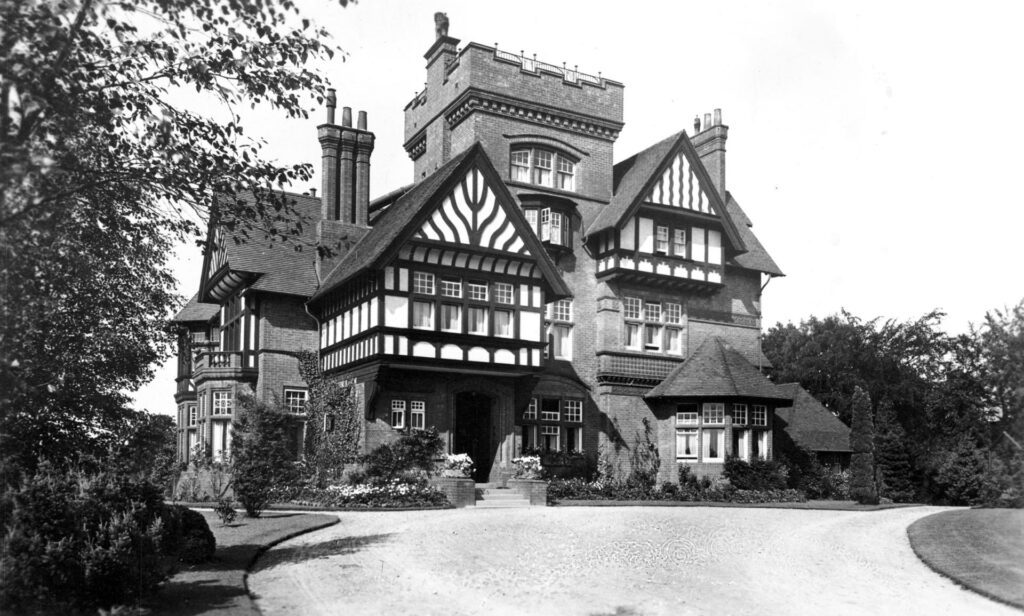
The tower and decorative cast detailing of the red Ruabon bricks below the black and white timbered upper stories of Batterflats make the building particularly distinctive. In 1929, the house was bequeathed to the Church of Scotland as a residential home. In 1954 it was sold to Stirling Council for use as an old folk’s home, accommodating 30 people. In the 1980s it was converted to private housing, and the six acre site is now covered with a housing development.
There will be a talk in the Smith by Archivist Pam McNicol at 12 noon on Wednesday 10 May on Stirling’s Dean of Guild plans, for those who would like to know more about John Allan.
No one now thinks about Stirling’s glory days as a pottery producing area, when in the 17th century, most of the earthenware for central Scotland and beyond was produced in the Throsk Pottery. The potters lived in the surrounding areas of Bandeath, Poppletrees and Cockspow, within the Barony of Cowie, and were known as pigmakers, ‘pig’ being the Scots word for pottery. The Stirling Smith has five Throsk jugs, and the National Museum has eleven, recovered from the Forth at Gargunnock, indicating a capsized boat load. Sherds of Throsk Pottery have been found throughout central Scotland, and some were uncovered in the failed Scottish colony of 1698 in Darien, Panama. With the concentration of pottery producing talent in the Stirling area, it was perhaps no accident that the first industrial pottery in Glasgow was set up by a Stirling man, William Maxwell in 1722.
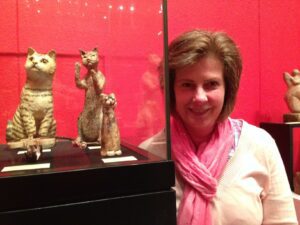
Until 28 May there is an exhibition at the Smith, showing the best of the contemporary work of the Scottish Potters Association. The SPA has only one Stirling member, Kathleen Morison, shown here with some of her work. Kathleen has worked in ceramics for four years, experimenting with alternative firing techniques, such as raku, and incorporating horsehair and feathers. She embraces the fun of imperfection and the joys of creativity, and calls her work ‘Wonky Pots’.
There are 40 potters in total exhibiting in the Smith, offering the opportunity of finding a truly unique gift, wonky or otherwise, for that special occasion.