

Friday, 26 June 2015 was the long anticipated launch of the Stirling Smith’s own summer exhibition.
The exhibition looks at the range, quality and importance of the collections. Stirling-based artists such as Hugh Green and Denovan Adam are on display beside many popular and pieces of art relating to Stirling.
Aspects of social history are covered with exhibits focusing on the suffrage movement, transport and money.
There are also objects with a more worldly heritage, The Mussel Gatherers of Villerville by Maurice Poirson, dominates an entire wall. There is the opportunity to meet the Samurai up close, along with pieces from Persia and Thailand/Burma.
The newest treasure to become part of the collection was unveiled by Lord Bruce.
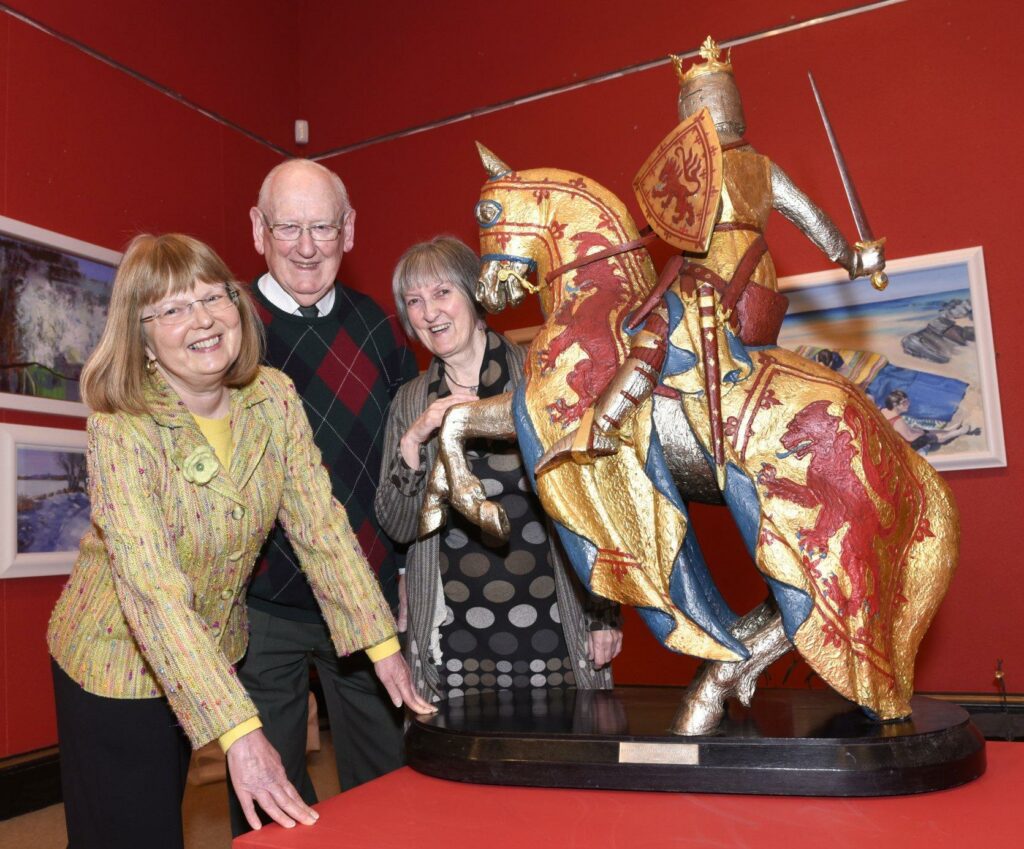
The King of Scots in Battle was one of the final designs for the Bronze statue which stands at Bannockburn. This maquette is one of 3. The original was commissioned by Chivas Regal for their Paisley Head Office.
Over 80 guests were welcomed to the opening, and joined the Smith Trustees, Director Elspeth King and Smith staff to see Dr Robin Campbell awarded the Fellowship of the Smith for his saleroom and auction house skill in adding to the collection. Many of the pieces in the exhibition can be attributed to Robin’s keen eye and auction skills.
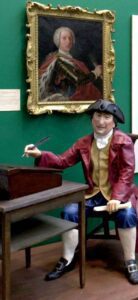 Dougal Graham (1724 – 1779) the Raploch Rapper, Poet, Chapman, and Stirling’s first war correspondent sits in effigy in the Stirling Smith.
On Friday 22 May at 7.30pm, writer and fellow poet John Coutts will brought him to life again when the Riverside Drama Club’s production of “A Chapman Calls” is staged in the Stirling Smith, in a special Evening with Dougal Graham.
Dougal Graham was a poor, disabled young man from the Raploch who at the age of 21 joined Bonnie Prince Charlie’s army as a camp follower. He had a sharp and ready wit and a talent for writing poetry. Within five months of the Jacobite defeat at Culloden, he had written his History of the Late Rebellion in rhyming verse. His chap books, which he sold from door to door, were the predecessors of our newspapers.
Dougal is one of the great heroes of Scottish chap book literature, whose work was much admired by literary giants like Sir Walter Scott. With this work, John Coutts is shining a light in the unknown world of chap book literature and giving us the opportunity to enjoy and have a laugh from the eighteenth century.
This weekend is the annual Festival of Museums, and to celebrate, the Stirling Smith is hosted a free demonstration at 2pm on Friday 15th May, by award-winning artist and local girl Rosanne Barr.
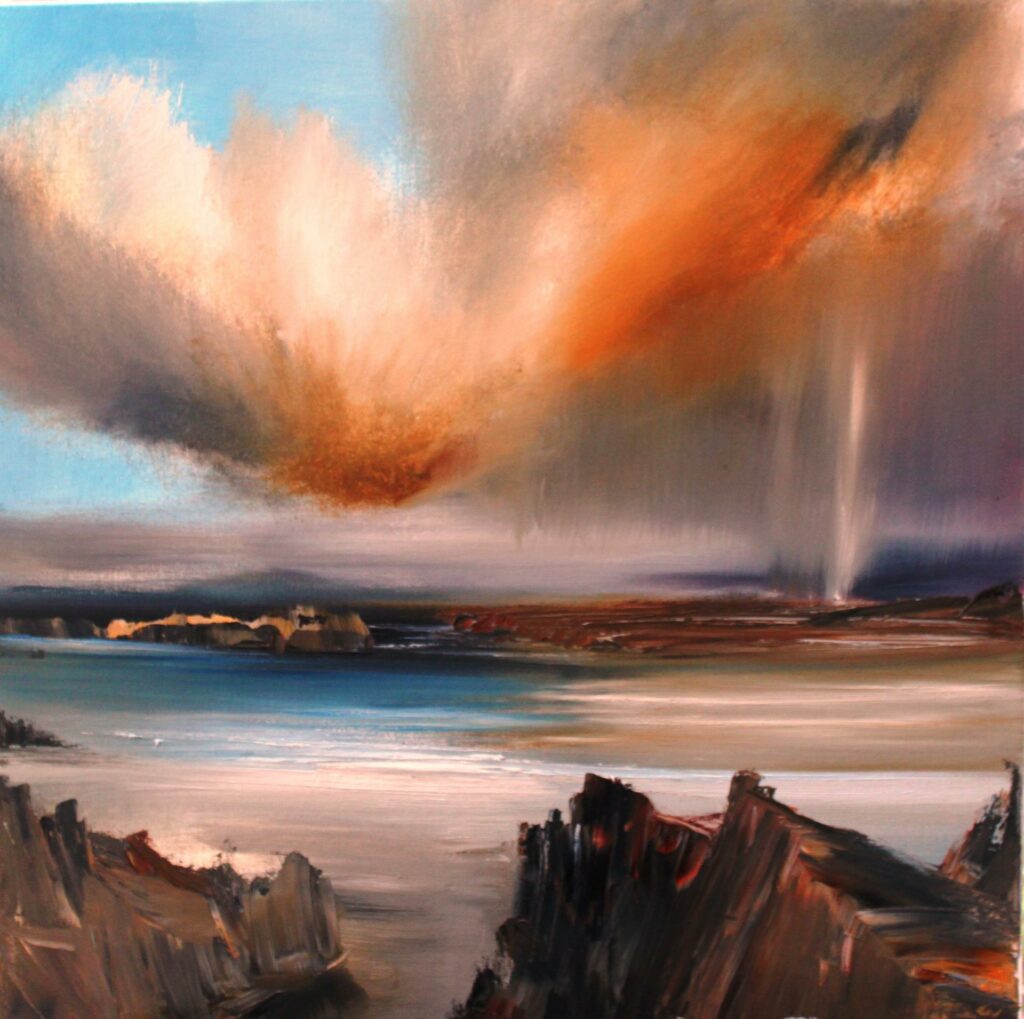
Rosanne, who is now Vice President of the Glasgow Society of Women Artists, was educated at Balfron High School and was a Jolomo Award Laureate. She graduated with first class honours from Duncan of Jordanstone College of Art, and like Jolomo, is now a highly regarded painter of Scottish landscapes. The capture of mists, storms, tides and sunsets is her speciality, and she set the tone for a new generation of Scottish landscape artists. In 2012, she was International Artist of the Year at Florida’s Great Gulf Arts Festival, and her work features in private collections in the USA, New Zealand, Thailand and Dubai. This is an unusual opportunity to see and eminent Scottish artist in action. The demonstration was be in water-soluble oils. The Glasgow Society of Women Artists exhibition at the Smith has been made possible with the support of the D W T Cargill Fund, the Martin Connell Charitable Trust and the PF Charitable Trust
 On Monday night, the Friends of the Smith are hosting a talk by Colin Tennant of Historic Scotland on the development of the Engine Shed, Forthside as Scotland’s first National Conservation Centre. This new national facility in Stirling will act as a focal point for those seeking information, advice and guidance on how to look after the built environment. Visitors will be welcomed to changing exhibitions and demonstrations of ‘conservation in action’. They will be able to chat to resident craftspeople and get information on traditional skills and building materials.
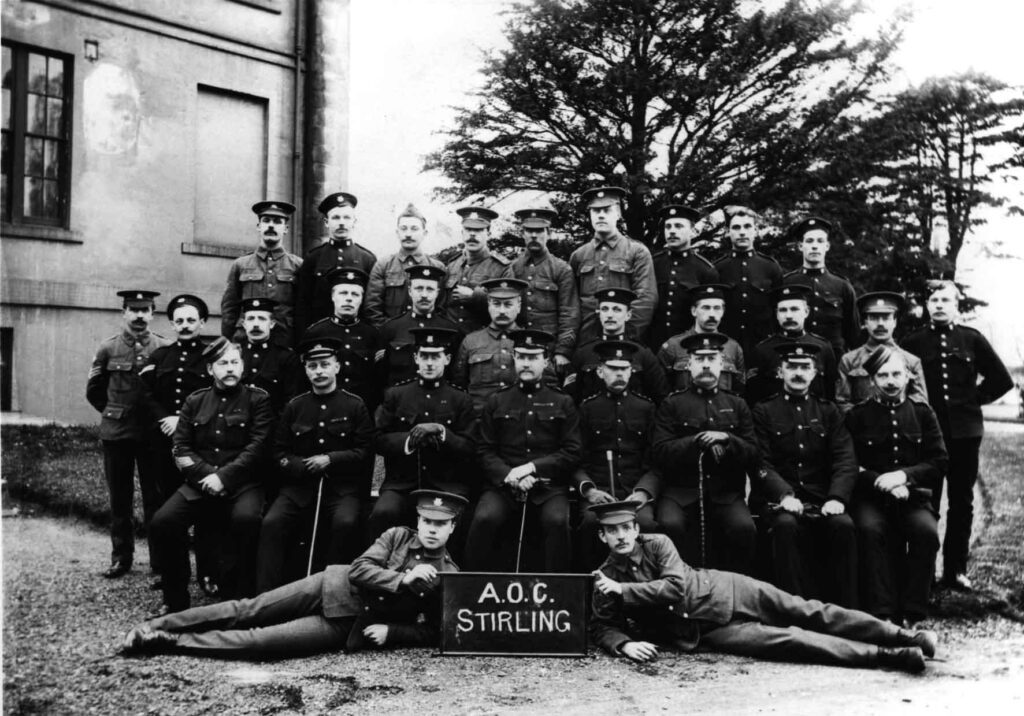
This is, therefore, a chance to look at the activity in Forthside 120 years ago, when the estate belonged to the Royal Army Ordnance Corps and the Engine Shed, built to service the railway engines which served the site, was only about 15 years old. The 11th Company RAOC are posing beside Forthside House and their occupations included an armourer, artificer, clerks, hammermen, a saddler, a blacksmith (and footballer), a painter, cook, baker, tinsmith and carpenter. The ordnance workers had to have a trade as well as army training. The photo is from Major Peter Whitehead’s collection, now in the Stirling Smith.
The Forthside estate was operated by the RAOC from 1886. One of its last major uses was to equip the army for the assault on the Falklands. The contents of the stores were lost on the container ship Atlantic Conveyor which was sunk by an exocet missile.
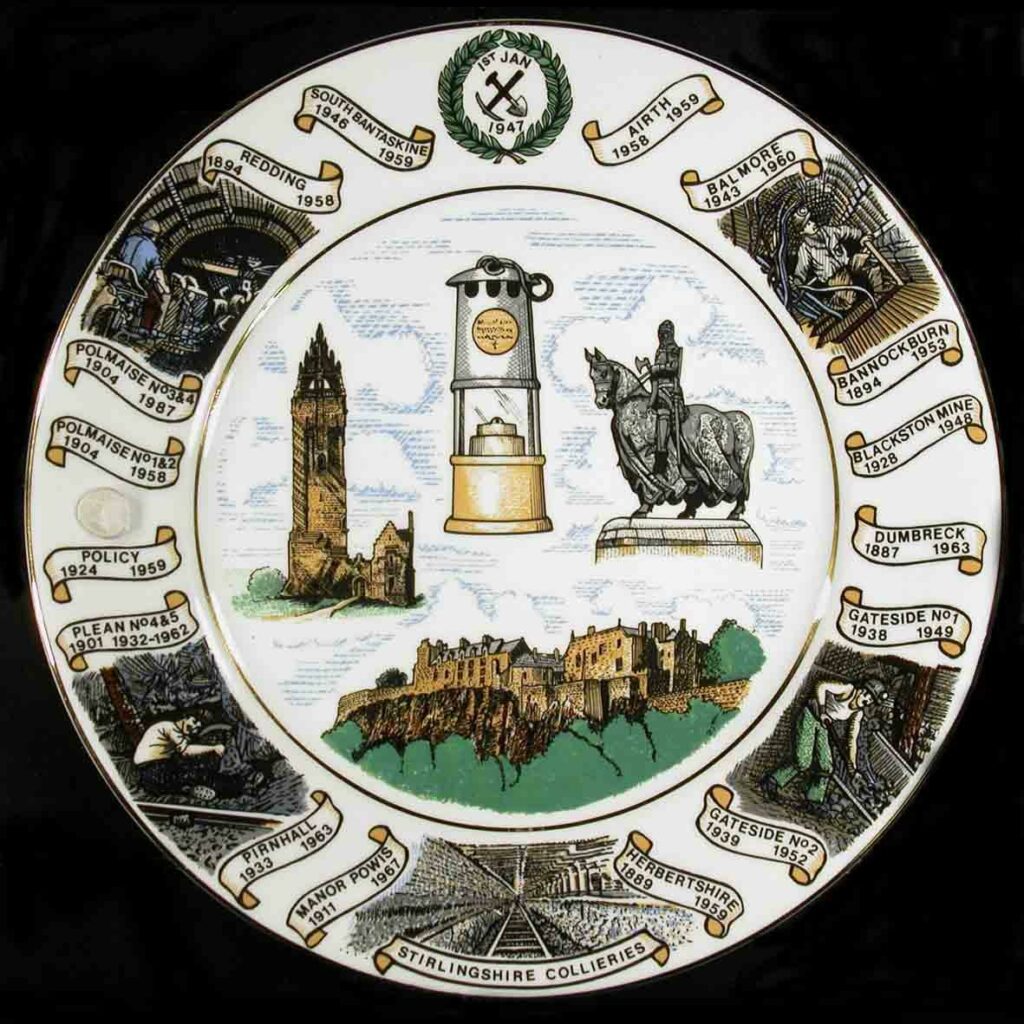
This rare plate, donated to the Smith collections by colliery workers William McKinlay and Raymond Frew, attempts, to sum up the significance of the Stirlingshire collieries. That the miners and the mining industry were as important to Stirling, as Stirling Castle, William Wallace and Robert the Bruce is undeniable. The deep mines sunk here, such as Bannockburn (1894), Plean (1901), Polmaise (1904) and Manor Powis (1911) were the wealth generators of the local economy and were worked by a community of people who regarded mining as a way of life, who worked together, lived together and played together. They changed the face of local politics, bringing in new and radical ideas.
When the Miner’s Strike started in 1984, Polmaise Colliery No 3 and 4 was one of the most efficient and productive mines in the country, had had major investment in new machinery and had an estimated coal reserve of 40 years. Three years later it was closed, flooded and destroyed.
As the 30th anniversary of the end of the Miner’s Strike approaches, it is perhaps time to look again at how mining shaped the Stirling community. There is no great visitor centre commemorating the miners, but there is the possibility of doing another exhibition. The Stirling Smith invites you to meet the Polmaise Colliery Face Book man in person to discuss this at 2pm on Friday 23 January 2015 in the Smith.
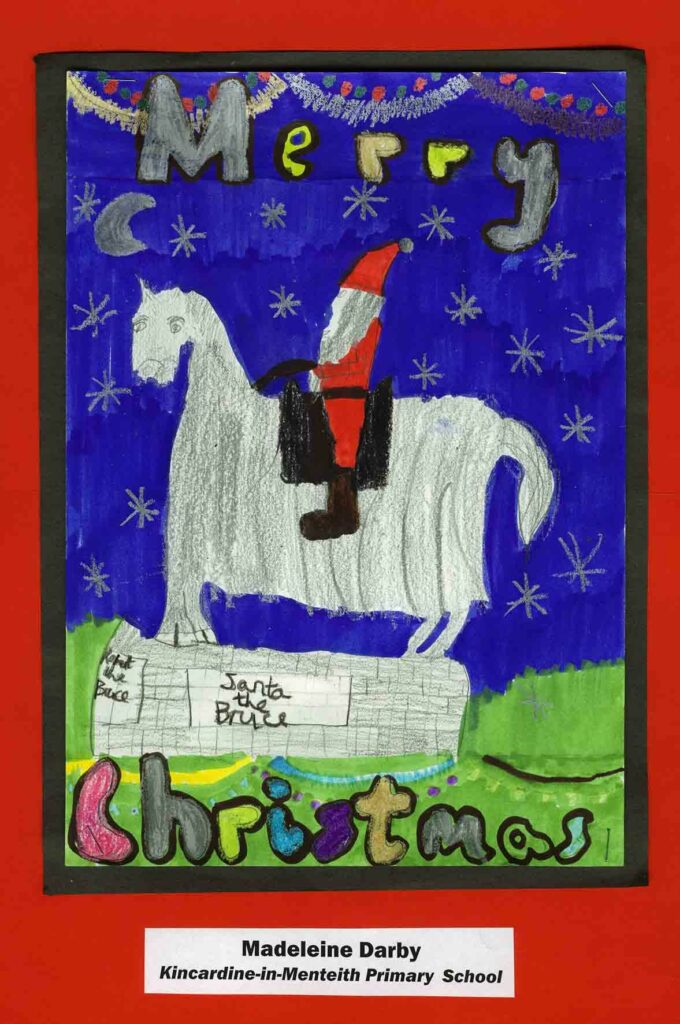 With three more posting days to Christmas, take a look at this Stirling card of 2004 which was in MP Anne McGuire’s annual Christmas Card Competition.
Christmas cards have changed in the last ten years. The ecard market has grown; messaging on social media platforms is free and popular; schools are now busy with so many projects at Christmas that such competitions are now a thing of the past.
This image has been retained in the Stirling Smith collections on account of its sense of place. The young artist has combined two legendary heroes in Robert the Bruce and Santa and placed them in a Stirling context. The Bannockburn statue by sculptor Charles de Orville Pilkington Jackson was erected 50 years ago, and it has burned itself into the consciousness of people world-wide. Note that the young artist has depicted the granite plinth, designed for the statue by architect Sir William Kininmonth, with some accuracy. Part of the success of the statue is the suitability of the plinth design. When the sculptor and architect work separately, as they did on the Rob Roy statue in Corn Exchange, the sculpture can be left looking odd and out of proportion.
Earlier this year both the Bruce statue and plinth were meticulously restored for the 700th anniversary of the Battle of Bannockburn, and are well worth a visit. There was once a tradition of visiting the Field of Bannockburn on New Year’s Day, when there was only the Borestone, a flagpole and the tin hut of the Bannockburn Guide. There is now so much more to enjoy.
The Declaration of Arbroath, sent by the barons and nobles of Scotland to the Pope on 6 April 1320, was a document which underlined the freedom won at Bannockburn and shaped political thought in Scotland and elsewhere thereafter.
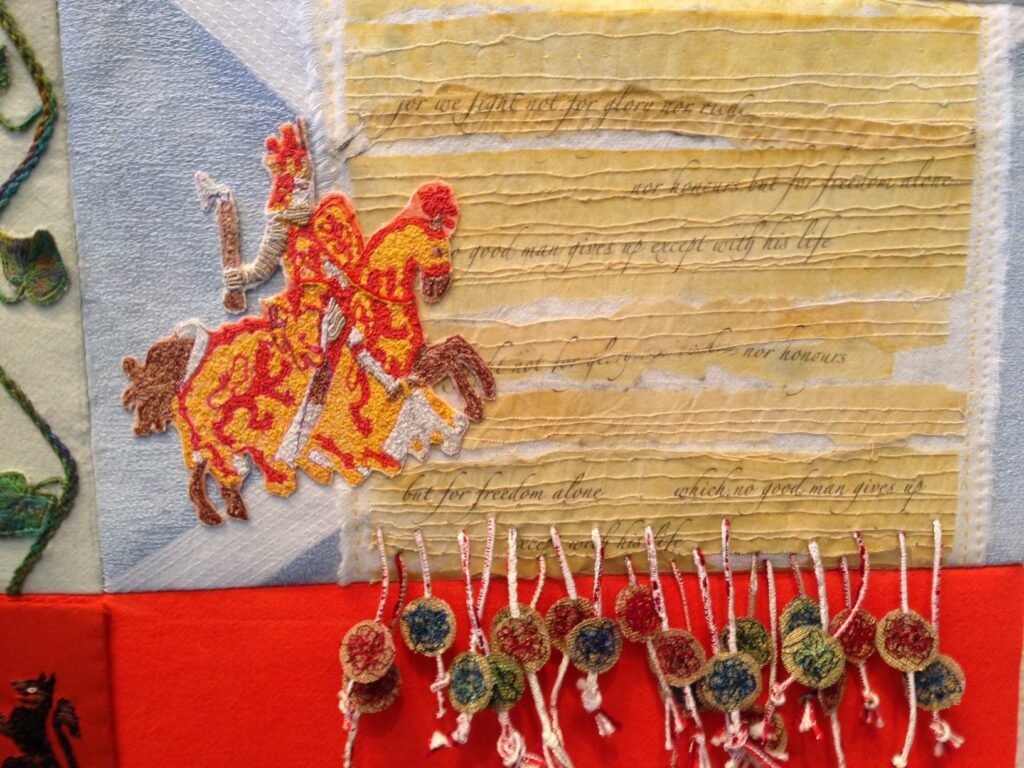
This version was stitched as part of the Smith’s 2014 banner by Stirling embroiderer Kirstine Higgins.
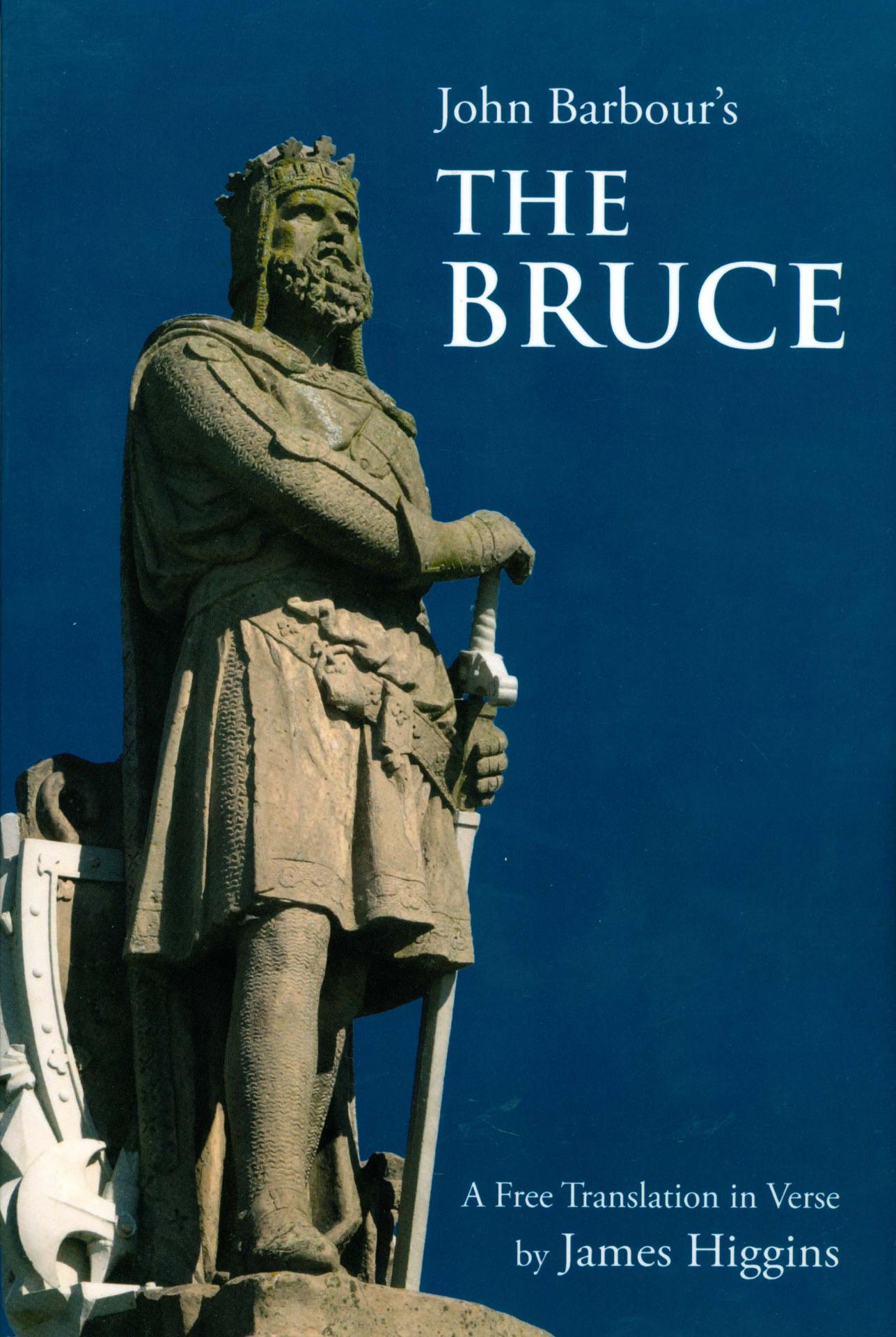
On 15 May Kirstine’s husband, James Higgins, will be speaking on the epic work by poet John Barbour, The Bruce, which he has translated from Scots into contemporary English, “just for fun”. Barbour wrote his epic work in the 1370s, sixty years after Bannockburn, for Robert the Bruce’s grandson. It is composed in verse, in 20 books, and this new free translation in verse runs to over 400 pages. The work can now be read and easily understood in this special Stirling edition.
John Barbour’s Bruce is a main source for understanding the life and times of Robert the Bruce, and the talk by James Higgins at 12 noon on 15 May in the Smith will give a good introduction to this important work of Scottish literature and history. It will also be a celebration of the contribution of one Stirling family to Bannockburn 700.
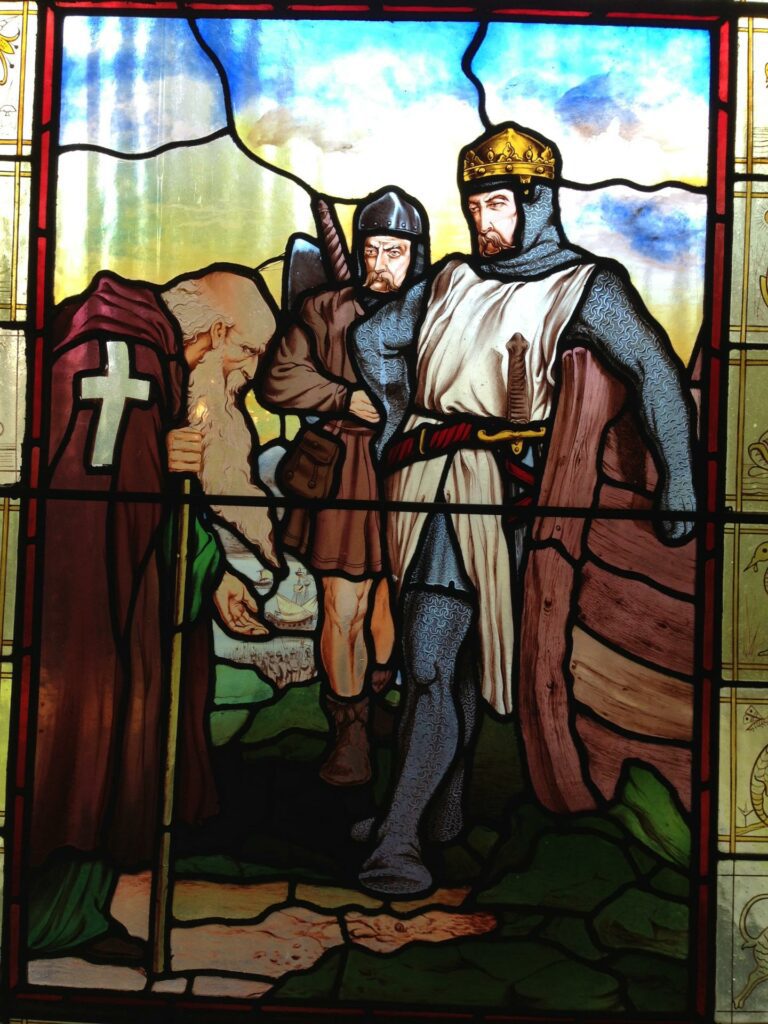
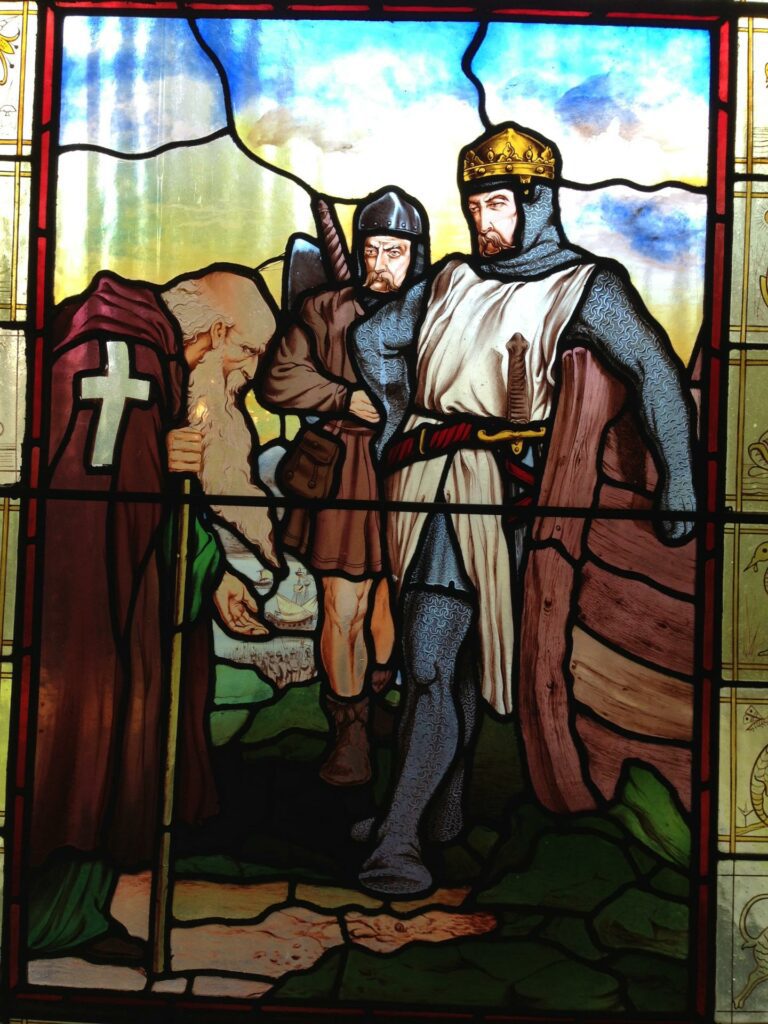 There are many interpretations of Bannockburn. Sir Walter Scott’s epic poem, The Lord of the Isles, published in 1815, is one of many literary works on the subject, and its hero, King Robert the Bruce. An episode is illustrated here in a window by Glasgow stained glass artist John Cairney in 1872. Scott’s work was popular for at least a century.
At 12 noon on Thursday 1 May 2014, Professor Robert Crawford of the University of St Andrews gave a talk on Bannockburns, the title of his new book, which deals with the literature of Bannockburn over the past 700 years. In 1314, the poet-in-residence was Robert Baston, who came north with Edward II to write about the great English victory. Captured and held prisoner by Bruce for 20 years, he wrote one of the greatest anti-war poems of the middle ages, before gaining his freedom. He wrote in Latin, and the poem was translated in 2004 by the Scottish Makar Edwin Morgan.
Robert Crawford, himself a leading Scottish poet, talked about the influence of Bannockburn on Scottish literature.
At 12 noon on Thursday 1 May, poet Robert Crawford will speak in the Stirling Smith Art Gallery and Museum on Bannockburns: Scottish Independence and Literary Imagination, 1314 – 2014, which is the subject of his latest book.
This is a rare opportunity to meet one of Scotland’s leading poets and explore the literary legacy of the Battle, which began with the great anti – war poem of the English poet Robert Baston who was captured by Robert the Bruce, and continues to this day.
Born in Lanarkshire, Robert Crawford studied and taught at Glasgow and Oxford, moving to the University of St Andrews in 1989 as Professor of the School of English. He has published six collections of poetry and over two dozen other books. A Fellow of the Royal Society of Edinburgh and of the British Academy, he has given readings and lectures at Berkeley, Oxford and Yale as well as in schools and village halls. An experienced broadcaster, he has been a judge of the National Poetry Competition, the T S Eliot Prize, and the David Cohen Prize.
Admission to the talk is free. Copies of the book, price £20, will be available on the day.
Event organised in conjunction with Waterstone’s of Stirling.
Twenty textile artists have collaborated on the new banner, sewn by the members of the Stirling and District Embroiderers Guild.
With the 140th birthday of the Smith, the 700th anniversary of Bannockburn, the centenary of the Great War, and the 50th anniversary of the Stirling – Dunedin twinning, the Year of Homecoming 2014 is a special year for Stirling and the Guild members have created a new work of art to mark it.
Drawing all of the threads of history together has been a year-long labour of love for the artists. Depicted on the banner is the Stirlingshire landscape, wild flowers, and some of the best built heritage – the Castle, Wallace Monument, Bannockburn, Cambuskenneth Abbey, the University and the Smith itself. The Stirling Heads make a special appearance.
The banner has been skilfully constructed in three parts, allowing each of the parts to be displayed separately, in different places, if required in future. Provost Mike Robbins, who is also a Smith Trustee, welcomed the Banner to the Smith.
The Banner is in the Stirling Threads exhibition in the Stirling Smith, which runs until 6 April and includes everything from a Bishop’s Preaching Scarf to a pair of shoes made for a fairy and finely embroidered evening bags.