

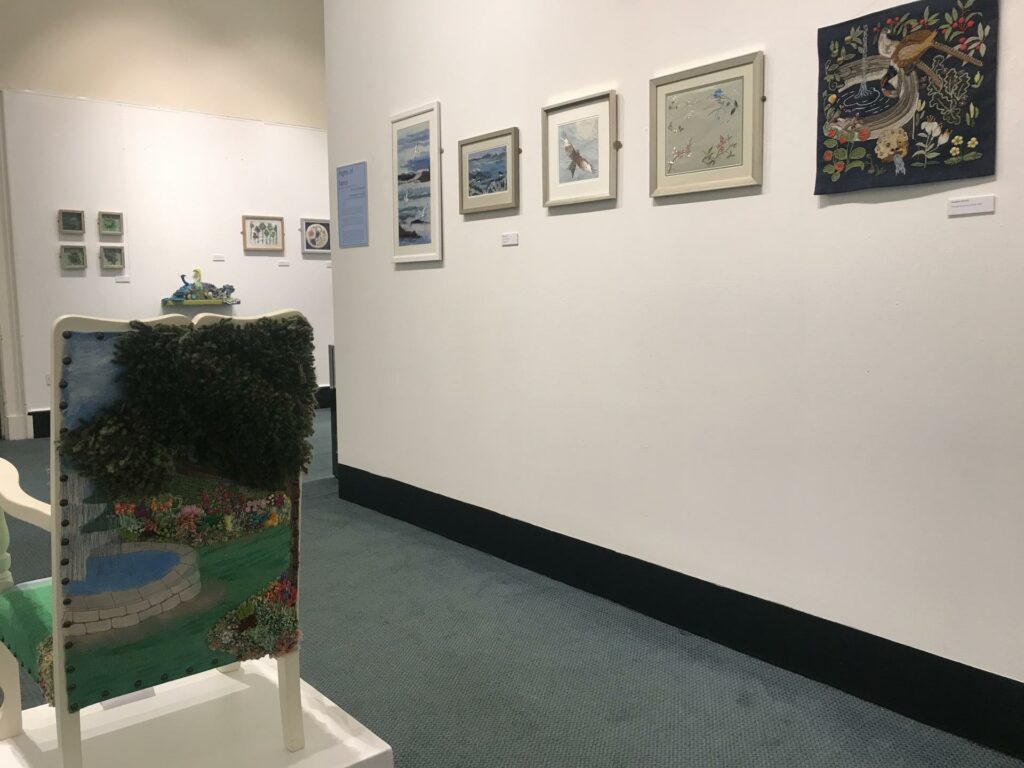
Our latest exhibition is now on display in Gallery 1: Flights of Fancy by The Stirling & Districts Embroiderers’ Guild.
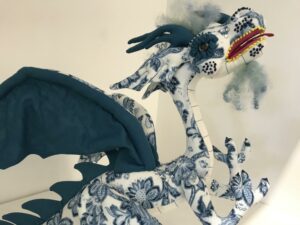
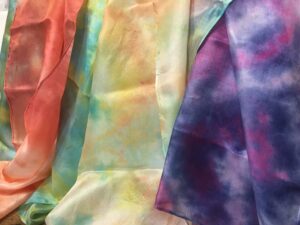
Early in the year, the Guild was preparing for a showcase of works created around the themes of flight and dream. However, this theme took on new meaning for members when lockdown restrictions were put in place in March. Members found themselves having to make ‘leaps of the immagination’ through artworks that not only include embroidery, but textile arts, hand-dying, and stumpwork.
The variety of works on display show the diversity of technique and interests of the guild members. The local branch has over thirty members made up of professional textile artists, teachers, and amateurs.
If you would like to see Flights of Fancy, pop over to the Smith Thursday to Sunday 11-4. The exhibition will be on view until 15 November. We look forward to welcoming you!
Exciting times at The Smith!
Work is about to start on renovating Gallery Two so we can bring you a beautifully refurbished space and a new exhibition, featuring work from our fine art collection. Getting work done is always a bit messy and disruptive but we will try our best to keep this to a minimum.
Gallery Two will be closed to the public from Friday 25 January and will re-open on Tuesday 12 March.
Gallery Three (The Stirling Story) will continue to be open to the public; please come to the main reception and our team will guide you from there. The Gallery Café and lecture theatre are open as normal, so you can still pop in for a delicious lunch and attend your regular groups.
PLEASE NOTE: During the period of renovation, wheelchair access to the museum will not always be possible. Please contact us if you have any accessibility needs.
We look forward to bringing you a new and improved gallery soon. We will keep you updated along the way. Thank you for your continued support.
 The story of William Wallace is central to the survival of Scotland as a nation and his victory at the Battle of Stirling Bridge in 1297 spread the fame of Stirling far and wide, according to contemporary reports. With 22 portraits of Wallace included in the 500 items in the Stirling Smith collections which reference the Wallace story and the presence of the Wallace Monument since 1869, Wallace is well-remembered in Stirling.
But there is more to the story. Wallace’s co-victor at Stirling Bridge was Andrew de Moray, who died of his wounds not long afterwards. The surviving letters to the towns of Lubeck and Hamburg, inviting trade with Scotland after the war, make it clear that Andrew de Moray and William Wallace were Guardians of the Realm when Scotland had no king. This concept was unique in European history.
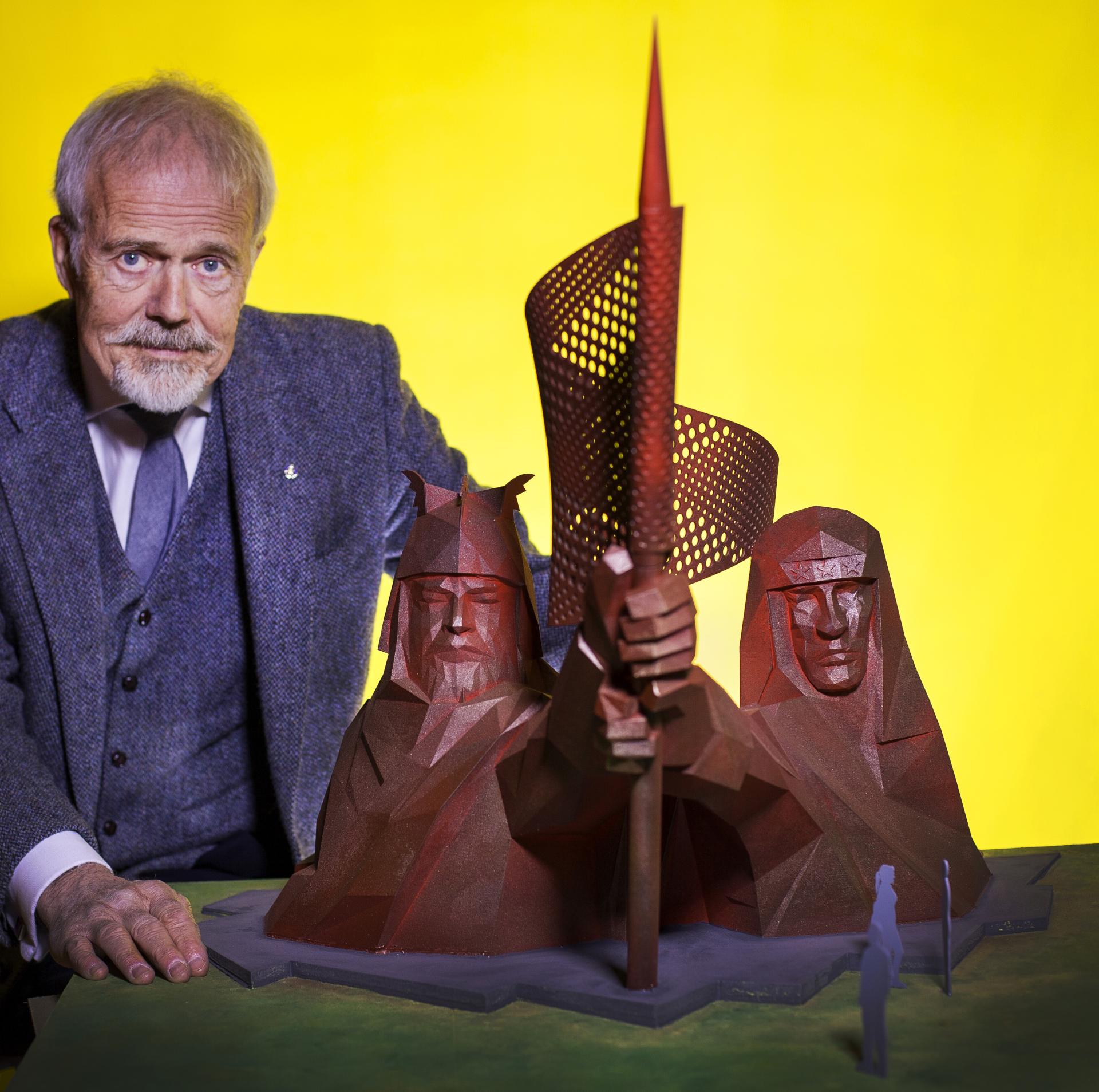
The Guardians of Scotland Trust’s exhibition of the proposed art work for Wallace AND Moray, to be sited at Stirling Bridge is at the Smith until 2 September. Shown here is the eminent Scottish sculptor Malcolm Robertson with his model of the work, (photo credit: Drew Farrell) to be constructed in corten steel at the Old Bridge. This is a proposal which will embed Wallace and Moray in the landscape. It is the first major public artwork since the Bannockburn statue of 1964.
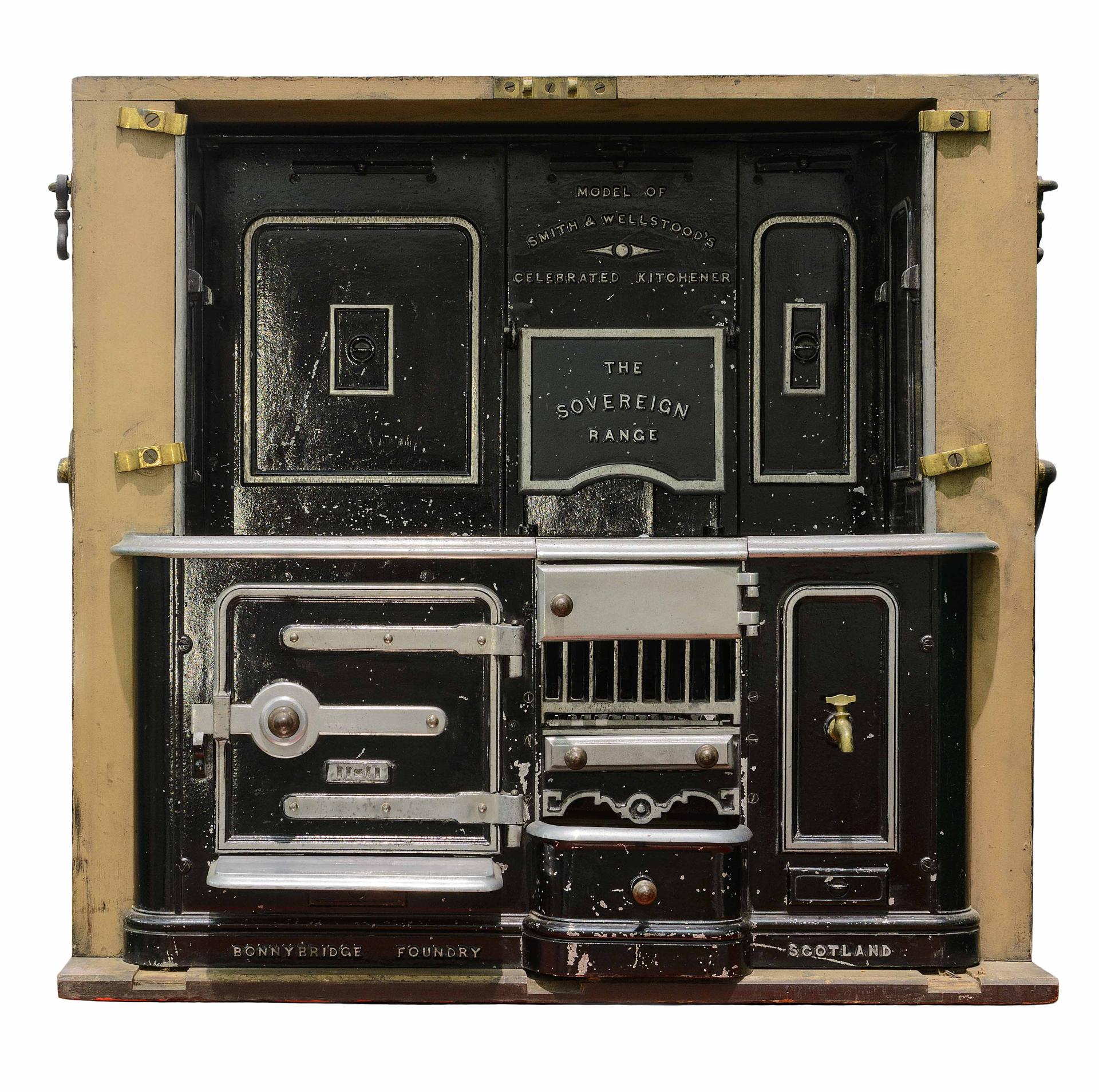 Kitchen cookers have developed dramatically in the last few decades. Microwave ovens have had wide public usage since the 1980s and now highly technical combination ovens using gas, electric and microwaves are sometimes available in the same appliance to enable perfection cooking.
This week’s subject is one of their predecessors. It is a Smith & Wellstood Sovereign Range, popular in the period 1890 – 1930. The big black Scottish ranges which dominated the kitchens of our predecessors were also multi-functional. As well as being a stove with an oven for baking, many like the Sovereign were also heaters and water heaters (note the tap for drawing water on the right), had hot plates and apertures which could serve as toasters and, when a line was strung from side to side of the mantlepiece could also dry clothes. All of them were coal-fired and some grandparents today can remember the Friday night ritual of black-leading the range to give it a perfect shine at the end of the week.
Smith & Wellstood originated in an ironmongery business in Glasgow in 1835 and their expansion to Bonnybridge and overseas is also the story of the Industrial Revolution. This is a model in the Stirling Smith collections used by a travelling salesman to explain the workings of the stove to customers.
Photograph by Alan Gardiner
‘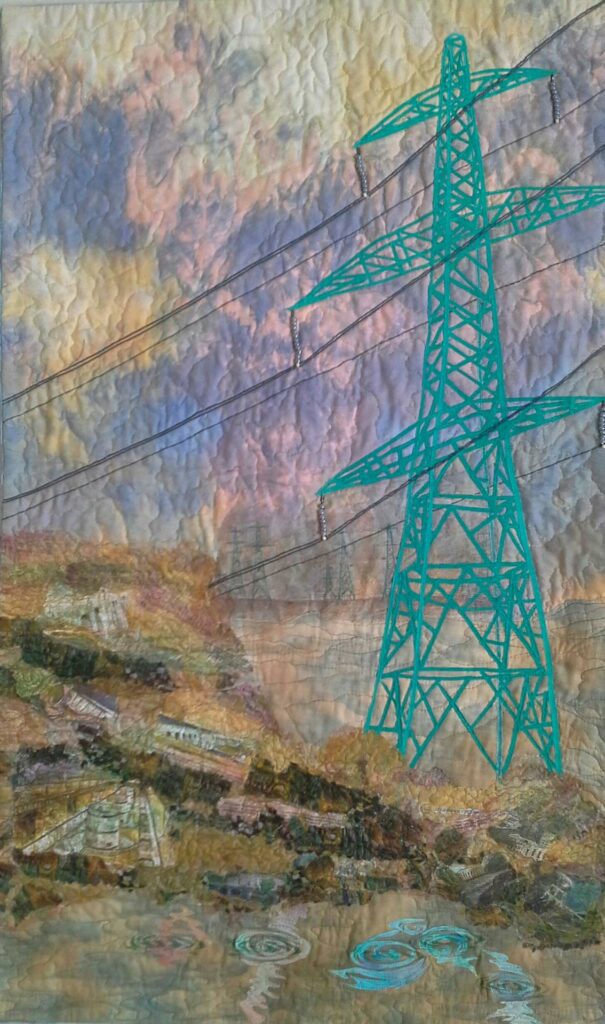 Textile Alchemy’ is the title of the latest exhibition by the Turning Point Textile group at the Stirling Smith. Turning Point is a group of seven textile artists from the central belt of Scotland who work separately but hang well together.
There are six themes in the exhibition, and Joyce Watson’s ‘Puddles to Power’ piece with the pylon, is in the environment section. ‘Water fills the dams, feeding our hydro-electric power which is then transmitted by majestic pylons’. After the protests over the Beauly to Denny Power line with its 615 giant pylons, pylon majesty is not the kind of theme that might have been expected in a gallery setting. The alchemy of the exhibition is in how textile materials are transformed into beautiful works of art.
One hanging by Christine Livingstone, depicting the artist’s garden with flowers was made with materials from a charity shop. ‘Trees and Leaves’ by Margaret Morrow has leaf shapes stitched to a layer of sheer fabric and the background burned using a soldering iron. The effect is that of an autumn day with leaves floating in the breeze.
At present, textile art is neither highly prized or priced, but these are the heirlooms of the future and most are available to buy now.
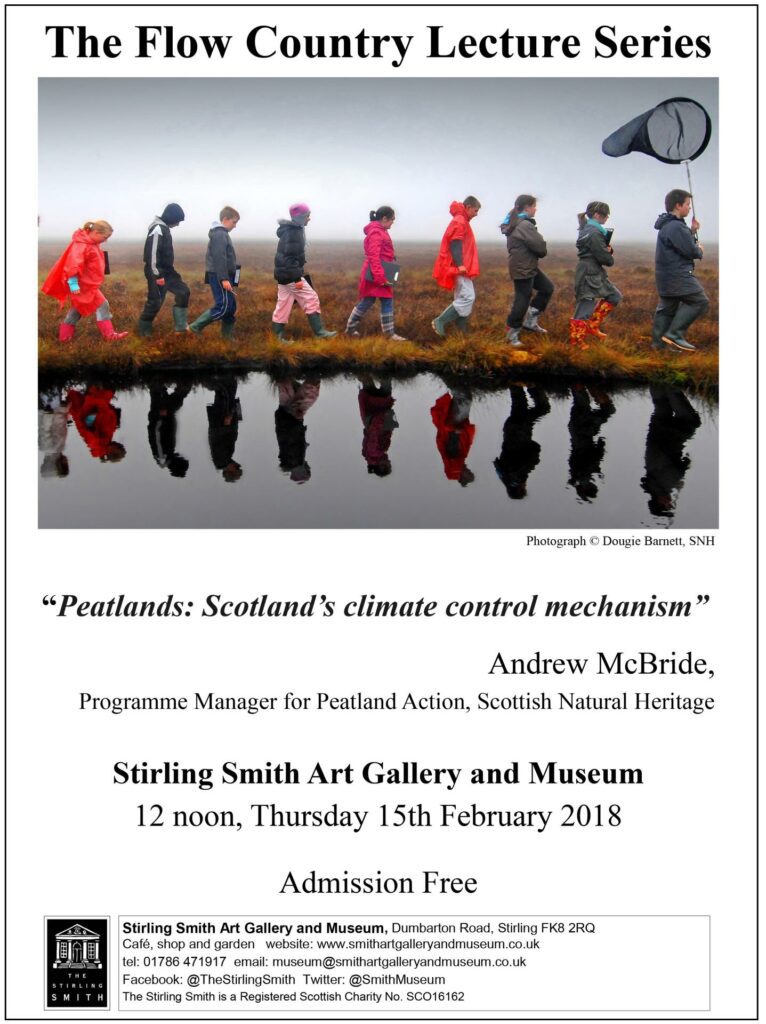 The series of talks by specialists continues on Thursday 15th February when at 12 noon, Andrew McBride, Peatland Action Programme Manager will speak on Peatlands: Scotland’s climate control mechanism at the Stirling Smith Art Gallery and Museum. Andrew is based at Redgorton, Perthshire, with Scottish Natural Heritage.
For those attending the talks, it has been a learning curve. Last week, Rebecca Crawford, Peatlands for People Project Officer, based in Stirling, was speaking on Wester Moss, the Bog Squad and Butterflies. The existence of Wester Moss in Fallin, near Polmaise 3 & 4 Pits, was news to some of the audience. It is a raised bog, as opposed to the blanket bog shown here. A conservation initiative with many volunteers is restoring the life of the bog by removing the trees and the scrub. This relatively small bog captures an estimated 600,000 tons of carbon beneath its mosses and waters, transforming it into peat. An apparent ‘wasteland’, it supports 134 different species of butterflies and moths, as well as creatures such as the bog sun jumping spider. The latter is found in only five places in Scotland, and Wester Moss is one of them.
The Flow Country touring exhibition is presented by the Peatlands Partnership, working with the Heritage Lottery Fund, the RSPB, Scottish Natural Heritage, the Highland Council and the Environmental Research Institute. It runs until 11 March.
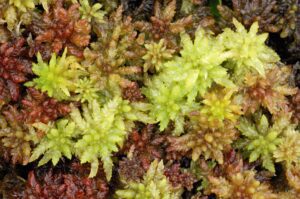 For the next 8 weeks, the main subject at the Stirling Smith Art Gallery and Museum will be the story, the glory and the environmental importance of Scotland’s peat bogs. The carse lands in and around Stirling were formerly peat bogs, created through the growth of mosses. The healing properties of sphagnum were well known in two world wars and the environmental importance of Flanders Moss is now recognised.
The Flow Country touring exhibition is presented by the Peatlands Partnership, working with the Heritage Lottery Fund, the RSPB, Scottish Natural Heritage, the Highland Council and the Environmental Research Institute. The Flow Country which stretches through Caithness and Sutherland in the far north of Scotland is the best blanket bog of its type in the world and hugely important for biodiversity. The area is also of key significance in Britain’s efforts to mitigate climate change. There is more carbon locked up in the peat of the Flow Country than in all of the UK’s forests combined. Keeping this carbon locked away is vital in helping to regulate the planet’s climate and work is ongoing to restore areas damaged by past management.
The exhibition lets you explore the bogs without wetting your feet, and there will be a series of 6 free lunchtime talks on Thursdays from 1 February.
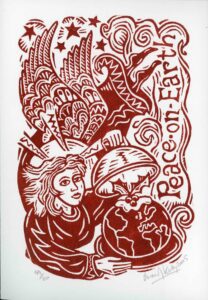
This hand -printed Stirling Christmas card of 2005 is one of many in the Stirling Christmas exhibition at the Stirling Smith Art Gallery and Museum, and is the work of artist Owain Kirby.
Although Owain was born in Greenock and spent his childhood in other parts of Scotland, after graduating with a first- class honours degree from Duncan of Jordanstone College of Art in Dundee, he came to live in Stirling and has spent his creative life here.
Since 1996, he has provided illustrative images to accompany exhibitions and publications in the Stirling Smith, from the letterhead onwards. Having an artist with an understanding of history who is committed to producing quality illustrations is an asset to any museum. Having one who lives in and loves Stirling is beyond price. His illustrations contributed to the success of the City Bid in 2002. The Smith has benefitted with his illustrations produced for the Wallace exhibition (1997), Ailie’s Garden (2002), the George Buchanan exhibition (2006) and many others, including the new display for the world’s oldest football.
Owain Kirby is part of the contemporary arts scene in Stirling, working without personal recognition. The compensation is that he is one of the few artists who does not need to sign his work, as his style is unmistakeable.
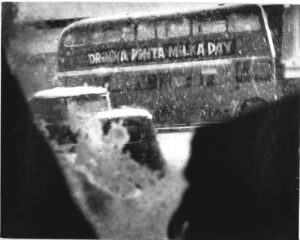
The Stirling Christmas exhibition in the Stirling Smith contains many iconic images from the recent past. This photograph was taken from a bus on the Glasgow Road, Stirling, on a grim winter’s day, giving the bus driver’s view. The photographer was A D S MacPherson (1913 – 2009), a freelancer. Living in Stirling, he took great delight in photographing both the old town and new developments such as the University, which opened in 1967. His work was highly regarded, and his photographs appeared in half page format in the Scotsman and Weekly Scotsman, as well as featuring in their annual calendars. All of his pictures were developed and processed in his home in Stirling. He presented a large collection of his best photographs to the Stirling Smith after his retirement in 1982.
‘Drinka Pinta Milka Day’ was a national Milk Marketing Board campaign which started in 1958 and ran for many years. From 1958 – 1993, they also ran the 1500 mile Round Britain Cycling Race. This came to an end with the deregulation of the market in 1994.
The exhibition is packed with Stirling memories – Stirling Annuals from the Drummond Tract Depot, Stirling Observer Annuals and toys and games from the recent past. As always, admission and parking are free, with closures on 25 – 26 December and 1 -2 January only.
The current Stirling Smith exhibition, supported by the Friends of the Smith, sets out to show how Stirling was painted throughout the ages. Among many old friends are two new additions to the collection, gifted by Annabel Young of Dunblane and painted by the artist B Rounthwaite. Both show Stirling Castle from Raploch and date to just before the Second World War.
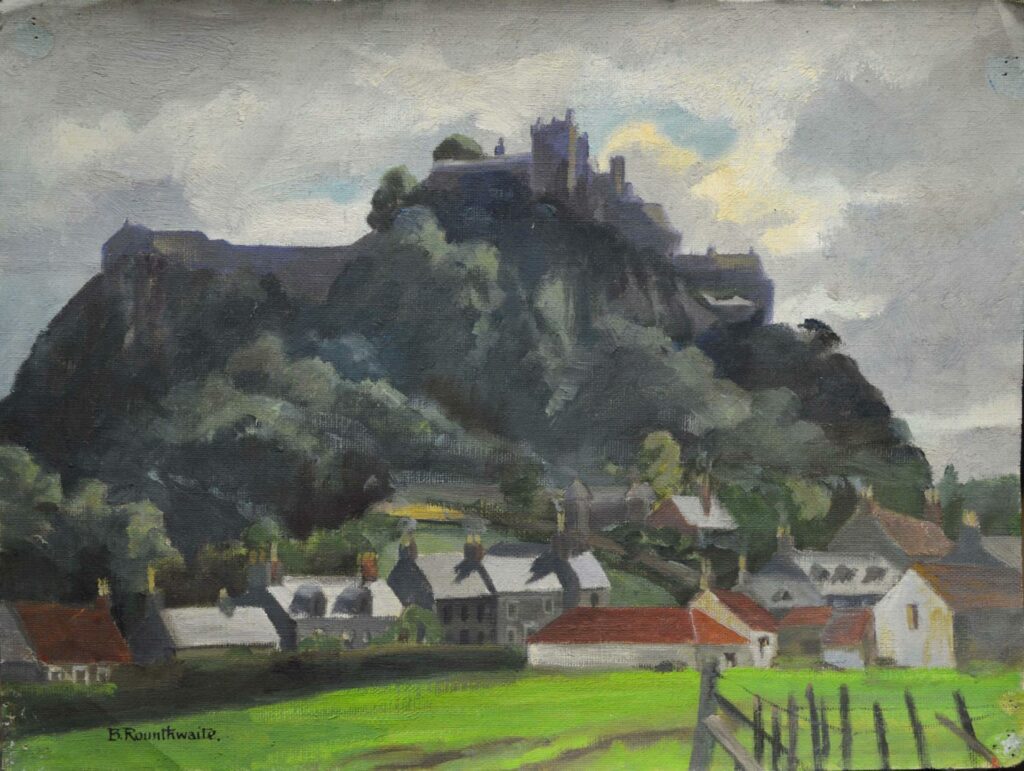
This view of the Castle with the houses of Raploch and Charlie Smith’s farm was considered to be one of the great beauty spots of Scotland, as it was painted by many artists over the decades. One of Kelvingrove’s best paintings by David Gauld (1867 – 1936) is of this view, and he painted several for other patrons. Nothing is known of B Rounthwaite, except that his paintings have a relationship to the Stirling Smith, where he may have held some classes, as many artists did. The only certainty is that he was one of hundreds of artists who came to Stirling to capture its beauty on canvas.
The exhibition features work by the great Scottish landscape artists Alexander Nasmyth (1758 – 1840) and Horatio McCulloch (1805 – 1867), as well as ‘Glasgow Boys’ William Kennedy, George Henry and John Lochhead.